China's Physical AI Funding Slows as Investors Seek Robot Orders
Financing for embodied AI companies has fallen sharply from its June peak, while investors are paying closer attention to commercial deployments and repeat business.

November 16, 2026 by Artem
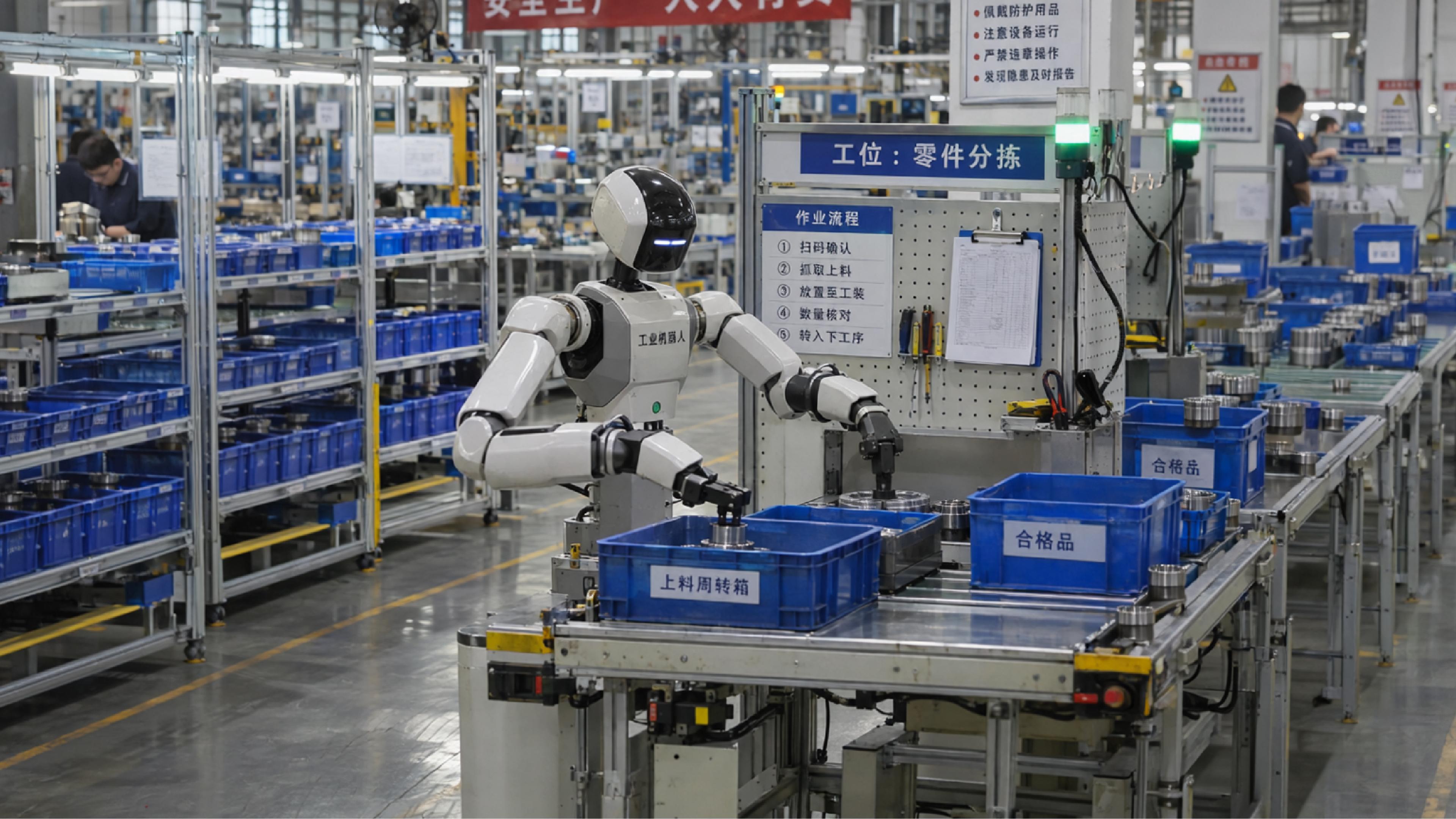
BEIJING -- The financing for China’s embodied artificial intelligence industry has fallen drastically since June, with investors opting to invest in robotics companies which have orders and can make a delivery system instead of those depending on technology demonstration.
The monthly financing in the industry has dropped from over 30 billion yuan ($4.2 billion) in June to about 10.1 billion yuan in October, as reported by state news agency Xinhua Nov. 15 quoting research firms.
It indicates a fall of at least 66 percent within four months, but Xinhua could not clarify whether it used the same criteria for compiling the monthly figure and what are the datasets being referred to by it.
According to IT Juzi, an investment data firm, the embodied artificial intelligence industry of China received about 93.5 billion yuan in financing in the first six months of 2026. It was roughly five times the same period last year and involved 322 financing deals.
The change in investors’ priority is putting more pressure on robotics manufacturers to show deliveries, operation and orders from customers.
Galbot is one of the firms that have been increasing its commercial activities, deploying over 1,000 robots in various applications such as loading and unloading and material handling in manufacturing and other industries. The firm has, however, failed to provide a detailed list of the number of robots working in their customers' facilities.
Practical Barriers Persist
Evolution from demonstrations to regular operation is a challenge.
Technical demonstration alone can't support a high valuation, said Wu Ke, the assistant director of the Institute of Risk Analysis, Prediction and Management of Southern University of Science and Technology. They have to develop the applications that will function well and produce meaningful operational data, he told Xinhua.
Some projects depend on customized demonstrations in controlled or semi-controlled settings. Robots lack the flexibility to operate in unpredictable environments, while high costs associated with their parts, maintenance, and programming make operations costly.
This makes it challenging for robot makers to repeat successes among different clients.
Though the reported slowdown in funding doesn't prove the continuous decline in investments into robotics in China, the increasing demand from investors for the proof of the ability of robots to perform their tasks regularly and profitably puts companies in trouble.
More articles on this topic
147 articles ReportSPARKOZ Plans U.S. Cleaning Robot Production With Pacific Floorcare
 ReportROBOTERA Deploys Humanoids at 11 China Post Hubs
 ReportGeneral Motors Plans to Increase Factory Robotics and Automation by 20% by 2028
 ReportCanada’s Promise Robotics Raises $28M to Expand Homebuilding
 ReportSingapore's Certis Robot Fleet Tops 60 Amid New Humanoid Tests
 ReportBosch-Backed Boyuan Capital Bets on Industrial Robotics With New Fund
 ReportAndromeda Robotics Raises $30 Million in Equity Offering
 ReportBoston Dynamics' Q3 Loss More Than Doubles to $175 Million
 ReportROBOTERA Launches Dexterous Hand for NVIDIA's Humanoid AI
 ReportLG Partners With Korean Agency on Humanoid Robot Safety
 ReportZhejiang Humanoid Robot Center Plans Tenfold Capacity Increase
 ReportOpenAI Disbands Robotics Team, Shifts Focus to General AI
BUSINESS NEWS WEEKLY LETTER
The Weekly Letter for Robotics Professionals, Summarizing the Most Important Industry Moves, Launches, Deals and Signals.