Panasonic's Robot AI Outperforms Rivals in Manipulation Tests
Developed by Panasonic and research partners, T-Rex AI model achieved a 65% success rate across 12 tasks, compared with 35% for its closest competitor.

November 6, 2026 by Artem
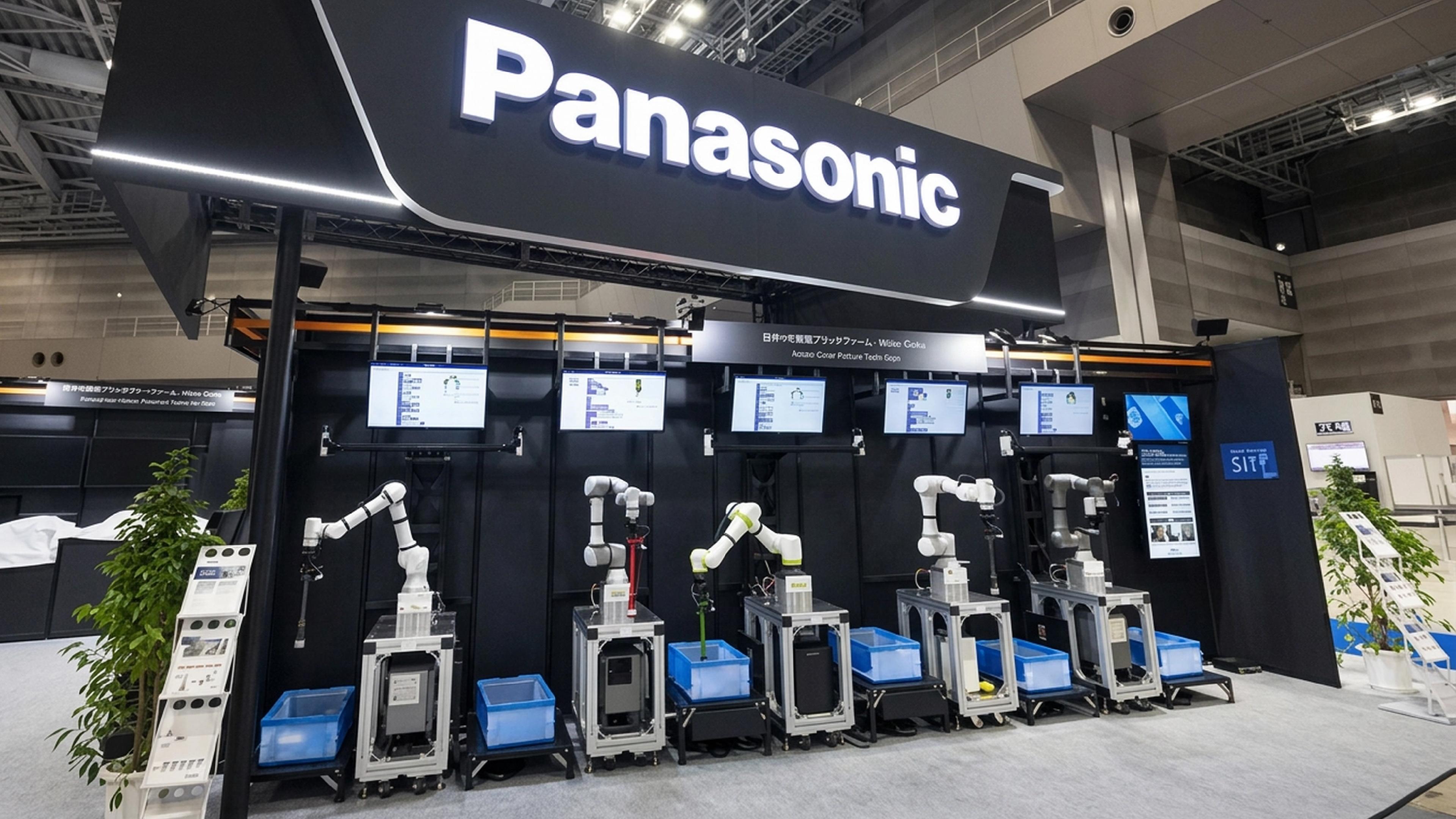
OSAKA, Japan -- Panasonic Holdings and its collaborators have developed T-Rex artificial intelligence model, which manages robotic hands through fingertip sensor and demonstrates a manipulation success rate of 65% as opposed to 35% of the leading competitor’s model.
Panasonic reported Nov. 5 that in 12 manipulation tasks that involved delicate force control T-Rex has performed better than six other AI models. Tasks included flipping pages, moving eggs, squeezing toothpaste, unlocking door with key, and screwing light bulbs in.
T-Rex showed a 65% success rate whereas EgoScale had 35%, π0.5 had 17% and Tactile-VLA had 15% success rates. Other three models had success rates ranging from 3% to 6%.
Unlike other robot AI models that operate with the help of camera and instruction in language format, T-Rex detects pressure, slipping, and contact with objects through tactile sensors.
It comprises two kinds of controls, including a process which uses visual information to perform the action about five times each second. Another control process that uses the information provided by touch performs about 20 times a second and adjusts in case of slipping objects or excessive pressure on the robot.
The average success rate for T-Rex without tactile data was 42%, as reported by Panasonic.
For training, the researchers used 100 hours of robot manipulation data related to about 200 different objects and actions from 22 classes. Also, it has been trained using almost 22,900 hours of human activity videos.
This study involved Panasonic, the University of California, Berkeley, Nvidia, Stanford University, Sapienza University of Rome, and ItalAI. It will be presented at the Conference on Robot Learning in Austin, Texas, Nov. 9-12. Panasonic plans to apply the technology to manufacturing and logistics tasks but has not announced commercial deployments.
More articles on this topic
127 articles ReportEmbodied AI Presents Wheeled Humanoid for Factory Work
 ReportChina’s LiberAI Reports 36% Success Rate for New Robot Model
 ReportAgility Robotics Starts Nasdaq Trading After $465 Million Deal
 ReportJapan’s MUSE Raises $11M to Expand Armo Robot Production
 ReportChina Blocks ABB Robotics Sale to SoftBank, Talks Continue
 ReportIndia’s Peppermint Robotics Raises $10.5M to Expand Manufacturing
 ReportTerra Robotics, ID Logistics Plan Humanoid Warehouse Trial
 ReportSyncere Raises $11 Million to Scale Robotic Lamp Production
 ReportNew ISO Standard Could Ease Multi-Vendor Robot Integration
 ReportPudu Introduces Self-Sharpening Robot Lawn Mower Series
 ReportSchaeffler, Wandelbots Partner to Scale Physical AI in Factories
 ReportSouth Korea Opens Humanoid Data Factory With 12 Robots
BUSINESS NEWS WEEKLY LETTER
The Weekly Letter for Robotics Professionals, Summarizing the Most Important Industry Moves, Launches, Deals and Signals.