S. Korea Approves Robros Humanoid Tests Alongside Workers
The first-ever regulatory exemption allows the company to test bipedal robots at semiconductor, automotive, shipbuilding and logistics facilities.

October 16, 2026 by Artem
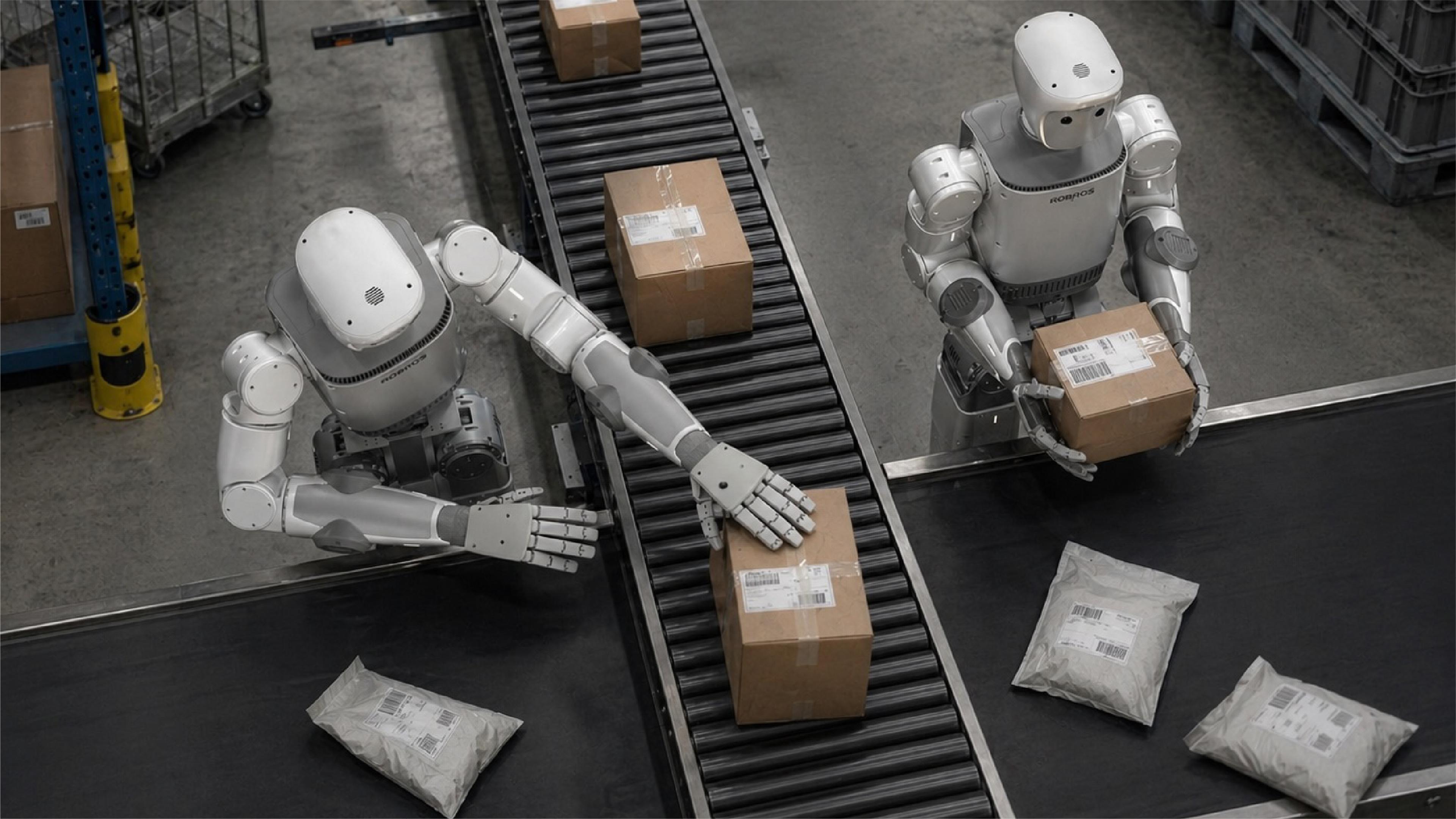
SEOUL -- South Korea has become the first state to approve plans by robotics company Robros to test humanoid robots alongside factory workers at industrial sites, granting a regulatory exemption that allows the machines to operate in shared workspaces.
The Ministry of Trade, Industry and Energy gave its approval after evaluation by its Industrial Convergence Regulatory Sandbox Review Committee, Yonhap reported (Korean-language report).
The decision permits Robros to test its bipedal humanoids at facilities operated by at Nepes, Sungwoo Hitech, HD Hyundai Samho and Delivery Lab.
The tests will involve different industrial tasks. At Nepes, the robots will take out impurities from round parts used in semiconductor packaging. At Sungwoo Hitech, they will place parts on car bodies.
HD Hyundai Samho will evaluate humanoids stacking scaffolding brackets used in shipbuilding, while Delivery Lab will test their ability to move refrigerated logistics packaging.
The four assignments will expose the robots to different requirements for handling materials, moving through industrial environments and working near employees.
The regulatory exemption addresses restrictions designed primarily for conventional industrial robots, which commonly operate in areas protected from human presence.
Humanoids are intended to work at multiple stations and handle objects in environments designed for people. That creates additional safety requirements involving collision avoidance, stability and interaction with workers.
The approval allows Robros and partners to test these issues in a controlled environment instead of treating them as fixed industrial machines.
The trials are subject to workplace risk assessments and measures to reduce identified hazards. South Korean authorities will use the study to help develop safety standards for humanoids operating in manufacturing environments.
The approval lacks confirmation that the machines can already perform these jobs at commercial scale or operate without human supervision. Information on 20 robots’ distribution and test timeframe remain undisclosed. Also, the participating companies have yet to reveal purchase plans.
More articles on this topic
147 articles ReportSPARKOZ Plans U.S. Cleaning Robot Production With Pacific Floorcare
 ReportROBOTERA Deploys Humanoids at 11 China Post Hubs
 ReportGeneral Motors Plans to Increase Factory Robotics and Automation by 20% by 2028
 ReportCanada’s Promise Robotics Raises $28M to Expand Homebuilding
 ReportSingapore's Certis Robot Fleet Tops 60 Amid New Humanoid Tests
 ReportBosch-Backed Boyuan Capital Bets on Industrial Robotics With New Fund
 ReportAndromeda Robotics Raises $30 Million in Equity Offering
 ReportBoston Dynamics' Q3 Loss More Than Doubles to $175 Million
 ReportROBOTERA Launches Dexterous Hand for NVIDIA's Humanoid AI
 ReportLG Partners With Korean Agency on Humanoid Robot Safety
 ReportChina's Physical AI Funding Slows as Investors Seek Robot Orders
 ReportZhejiang Humanoid Robot Center Plans Tenfold Capacity Increase
BUSINESS NEWS WEEKLY LETTER
The Weekly Letter for Robotics Professionals, Summarizing the Most Important Industry Moves, Launches, Deals and Signals.