PUDU CC1 vs. KEENON KLEENBOT C55 vs. UniRing MAX
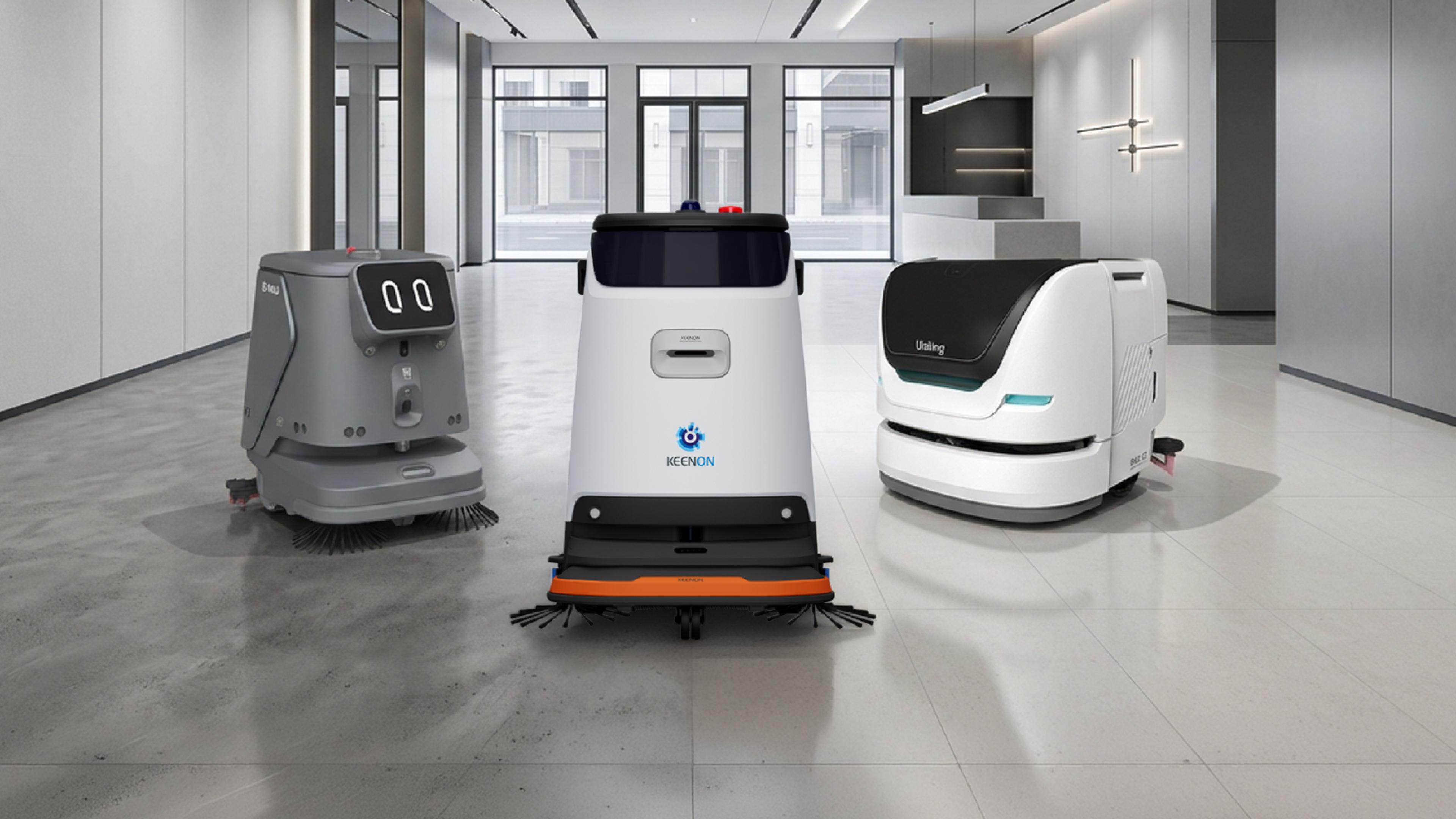
PUDU CC1, KEENON KLEENBOT C55 and UniRing MAX are autonomous floor-cleaning robots designed for commercial facility maintenance. We compare their cleaning capacity, navigation, operating endurance, physical size and commercial availability.

November 17, 2026 by Business Desk Team
Introduction
Cleaning large commercial floors requires consistent maintenance, particularly in buildings with heavy foot traffic and extensive operating hours. Shopping centers, office buildings, hospitals and other commercial facilities must regularly remove dust, debris and dirt while managing staffing requirements and cleaning schedules.
Autonomous floor-cleaning robots are designed to support these tasks by navigating designated areas and performing cleaning operations with reduced direct operator involvement.
However, commercial cleaning robots vary considerably in their size, cleaning capacity, operating endurance and intended environments.
Some are designed to balance multiple cleaning functions with a relatively compact footprint.
Others prioritize larger cleaning systems and higher theoretical coverage rates.
PUDU CC1, KEENON KLEENBOT C55 and UniRing MAX represent three options within the autonomous commercial floor-cleaning category.
PUDU CC1 is a Chinese cleaning robot designed for facility maintenance, with sweeping and scrubbing capabilities and a recorded weight of 60 kg.
KEENON KLEENBOT C55 is another Chinese commercial cleaning platform, featuring a larger clean-water tank, a wider cleaning path and a stated maximum cleaning efficiency of 2,376 square meters per hour.
UniRing MAX is a wheeled autonomous cleaning robot offered through PLiBOT, with sales primarily focused on Japan. It has a recorded cleaning width of 60 cm and an operating runtime of up to three hours.
All three platforms are listed with commercial status, although their purchasing arrangements and available specifications differ.
Based on ROBOT24.com market-research data records, this comparison examines their cleaning systems, navigation capabilities, operating endurance and suitability for different commercial environments.
At a Glance
| Autonomous Navigation | Yes | — | Yes |
|---|---|---|---|
| Availability | Commercially available | Commercially Available | Offered for purchase consultation by PLiBOT, whose sales are primarily limited to Japan. Availability in other territories, configurations and delivery terms require manufacturer/distributor confirmation. |
| Charging Time | <3 hours | Approximately 4 hours | — |
| Clean Water Tank | 15 L | 60 L | — |
| Cleaning Width | 500 mm (sweeping), 400 mm (scrubbing) | 550 mm | 60 cm |
| LiDAR | Yes | Yes | Yes |
| Maximum Cleaning Efficiency | 700–1,000 m²/h | 2,376 m²/hour | — |
| Maximum Speed | 1.2 m/s | Approximately 1.2 m/s (4.3 km/h) | — |
| Mobile App | Yes | Yes | — |
| Mobility Type | Wheeled | — | Wheeled UGV |
| Nationality | Chinese | Chinese | Chinese |
| Runtime | 4–9 hours (mode dependent) | Up to 5 hours (continuous with battery swapping) | Up to 3 h |
| Weight | 60 kg | 150 kg (including battery) | — |
| Wi-Fi | Yes | Yes | Yes |
| Remote Monitoring | — | Yes | Supported |
| Typical use | Cleaning & Facility Maintenance | Cleaning & Facility Maintenance | Cleaning & Facility Maintenance |
| Status | Commercial | Commercial | Commercial |
How They Compare
Cleaning applications and product positioning
PUDU CC1, KEENON KLEENBOT C55 and UniRing MAX are all positioned for commercial cleaning and facility maintenance. However, their recorded specifications suggest different operating priorities.
PUDU CC1 combines sweeping and scrubbing capabilities within a 60 kg platform. Its cleaning widths vary by function, with 500 mm recorded for sweeping and 400 mm for scrubbing. KLEENBOT C55 has a larger clean-water tank and a recorded cleaning width of 550 mm.
Its specifications indicate a platform designed for substantial commercial floor-cleaning workloads. UniRing MAX has a recorded cleaning width of 60 cm, equivalent to 600 mm. However, the supplied records do not specify its cleaning mechanism, water capacity or maximum cleaning efficiency. The most appropriate robot depends on the type of floor, cleaning requirements and size of the area being maintained.
Cleaning width
Cleaning width influences how much floor a robot can cover during a single pass. PUDU CC1 has a recorded sweeping width of 500 mm and a scrubbing width of 400 mm. KEENON KLEENBOT C55 has a cleaning width of 550 mm. UniRing MAX has a recorded cleaning width of 600 mm.
Based on the supplied figures, UniRing MAX has the widest stated cleaning path. Its 600 mm width is 50 mm wider than C55's and 100 mm wider than CC1's sweeping width. However, these measurements should not automatically be treated as equivalent. CC1's figures refer to specific cleaning functions, while the supplied records do not identify the exact cleaning modes associated with the C55 and UniRing MAX measurements. A fair comparison requires confirming that the widths refer to equivalent cleaning operations.
Cleaning efficiency
Cleaning efficiency is an important consideration for facilities with extensive floor areas. PUDU CC1 has a recorded maximum cleaning efficiency of 700–1,000 square meters per hour. KEENON KLEENBOT C55 has a stated maximum cleaning efficiency of 2,376 square meters per hour.
Based on the supplied figures, C55 has a substantially higher maximum coverage rating. Its stated maximum is approximately 2.4 times CC1's upper recorded figure.
However, these values should not be interpreted as verified performance under identical conditions. Cleaning efficiency can depend on cleaning width, movement speed, route layout, obstacles and operating mode. A manufacturer's theoretical maximum may differ from the area cleaned during routine operation.
UniRing MAX's maximum cleaning efficiency is not included in the supplied records. Consequently, a complete three-way comparison of cleaning productivity is not possible.
Clean-water capacity
Water-tank capacity can influence how long a floor-scrubbing robot operates before requiring replenishment. PUDU CC1 has a recorded clean-water tank capacity of 15 liters.
KEENON KLEENBOT C55 has a 60-liter clean-water tank. C55 therefore has four times CC1's stated clean-water capacity. This may reduce the frequency of refilling during suitable wet-cleaning operations.
However, a larger water tank does not automatically establish longer cleaning endurance. Water consumption depends on the cleaning method, flow settings and floor conditions. UniRing MAX's clean-water tank capacity is not provided in the supplied records. Its cleaning system and water requirements would need to be confirmed before making a direct comparison.
Physical weight and handling
PUDU CC1 has a recorded weight of 60 kg. KEENON KLEENBOT C55 weighs 150 kg, including its battery. Based on these figures, C55 is 90 kg heavier than CC1.
This difference may influence transportation, installation and manual handling. CC1's lower weight may make it easier to reposition or transport between operating locations. C55's heavier platform may require different handling arrangements.
However, weight alone does not establish cleaning capability, stability or maneuverability. The supplied records do not provide UniRing MAX's weight. A complete comparison of physical handling requirements would require that specification, along with dimensions and transport procedures.
Autonomous navigation
PUDU CC1 and UniRing MAX both have autonomous navigation explicitly listed in the supplied specifications. Autonomous navigation allows compatible robots to move through designated areas without requiring continuous manual steering.
This can support repeated cleaning operations across commercial spaces. KLEENBOT C55's autonomous-navigation field is blank in the supplied table. However, the absence of a value should not be interpreted as evidence that C55 lacks autonomous navigation. The table separately confirms that C55 includes LiDAR. Its exact navigation modes and operating capabilities should be verified using manufacturer documentation.
LiDAR and environmental perception
All three robots have LiDAR listed in their specifications. LiDAR uses laser-based distance measurements to support environmental perception. In autonomous cleaning systems, LiDAR data can contribute to mapping, localization and obstacle detection.
However, the presence of LiDAR does not establish identical navigation performance. Sensor configuration, software processing and obstacle-avoidance systems can vary. The supplied records do not provide comparable LiDAR ranges, sensor resolutions or obstacle-detection specifications. A direct navigation comparison would require testing the robots in the same environment.
Maximum movement speed
PUDU CC1 has a recorded maximum speed of 1.2 m/s. KEENON KLEENBOT C55 also has a recorded maximum speed of approximately 1.2 m/s, equivalent to about 4.3 km/h. Based on these figures, the two robots have similar stated maximum movement speeds.
However, maximum movement speed is not the same as cleaning speed. A robot may operate more slowly while scrubbing or navigating around obstacles. The supplied records do not include UniRing MAX's maximum speed. This prevents a complete three-way comparison.
Operating runtime
PUDU CC1 has a recorded runtime of four to nine hours, depending on the operating mode. KEENON KLEENBOT C55 has a stated runtime of up to five hours, with the supplied specification referencing continuous operation with battery swapping.
UniRing MAX has a recorded runtime of up to three hours. Based on these figures, CC1 has the longest stated upper runtime. Its maximum recorded endurance is nine hours, compared with five hours for C55 and three hours for UniRing MAX.
However, the figures require careful interpretation. CC1's runtime varies by cleaning mode. C55's stated endurance is associated with a battery-swapping arrangement that needs further clarification. UniRing MAX's three-hour figure does not identify the operating conditions. Consequently, these specifications do not establish which robot would complete the greatest amount of cleaning during a typical shift.
Charging time
PUDU CC1 has a recorded charging time of less than three hours. KEENON KLEENBOT C55 has a stated charging time of approximately four hours. Based on these figures, CC1 has the shorter recorded charging duration.
This may be relevant to facilities operating multiple cleaning shifts. However, charging time should be evaluated alongside battery runtime and cleaning workload. UniRing MAX's charging time is not included in the supplied records. A complete comparison would require confirmation of its charging specifications.
Battery management and shift continuity
Battery management can influence the practical availability of commercial cleaning robots. PUDU CC1 offers a recorded operating range of four to nine hours. KLEENBOT C55's supplied specifications reference battery swapping.
A battery-swapping arrangement may help reduce downtime where charged replacement batteries and suitable operating procedures are available. However, the supplied records do not clearly distinguish C55's runtime on a single battery from its operating continuity with battery replacement.
UniRing MAX has a recorded runtime of up to three hours. For facilities requiring extended cleaning operations, charging schedules and battery-management procedures should be evaluated alongside runtime figures.
Mobile application support
PUDU CC1 and KEENON KLEENBOT C55 both have mobile-app support listed in their specifications. Mobile applications may provide compatible functions for configuring cleaning operations, reviewing robot status or managing supported settings.
However, the supplied records do not establish that both robots offer identical app capabilities. UniRing MAX's mobile-app field is blank. This does not necessarily mean the platform lacks remote-management software. Its available control and management interfaces should be confirmed with the supplier.
Remote monitoring
KEENON KLEENBOT C55 has remote monitoring explicitly listed. UniRing MAX also supports remote monitoring according to the supplied records.
Remote monitoring can help facility managers review robot status and oversee cleaning operations. However, the available data does not identify the specific information accessible through either system.
PUDU CC1's remote-monitoring field is blank. This should not be interpreted as proof that CC1 lacks monitoring capabilities. The exact functions available through each manufacturer's software should be confirmed before deployment.
Wi-Fi connectivity
All three robots support Wi-Fi. Wireless connectivity may be relevant to compatible management, monitoring and software functions. However, Wi-Fi support alone does not establish identical network requirements or cloud services.
The supplied records do not identify the supported Wi-Fi standards or frequency bands for all three platforms. Facilities should confirm network compatibility and any requirements for remote management.
Commercial facility applications
All three robots are categorized under cleaning and facility maintenance. PUDU CC1 may be relevant to organizations seeking sweeping and scrubbing functions within a comparatively lighter platform.
KLEENBOT C55's larger clean-water tank and higher stated maximum cleaning efficiency may be relevant to facilities with substantial floor-cleaning requirements.
UniRing MAX offers a 600 mm cleaning width and autonomous navigation, but its suitability for particular cleaning tasks requires additional technical information. For each robot, deployment decisions should consider the actual floor area, surface type, cleaning frequency and operating environment.
Commercial availability
PUDU CC1 and KEENON KLEENBOT C55 are listed as commercially available. UniRing MAX is offered for purchase consultation through PLiBOT, whose sales are primarily limited to Japan. Availability in other territories, product configurations and delivery terms requires confirmation.
This distinction may be important for organizations operating outside Japan. Commercial status does not necessarily guarantee immediate stock or support in every market. Buyers should verify local distribution, installation services, warranty coverage and spare-parts availability.
Maintenance and operating requirements
Commercial cleaning robots require regular maintenance to support consistent operation. Tasks may include replenishing clean water, emptying waste containers, inspecting brushes and maintaining sensors.
PUDU CC1's 15-liter clean-water tank and KLEENBOT C55's 60-liter tank may create different refill requirements. However, actual refill frequency depends on water consumption during cleaning.
UniRing MAX's maintenance requirements cannot be compared fully because its water-system and cleaning-mechanism specifications are not included. Organizations should consider consumable costs, servicing intervals and staff requirements when assessing long-term operation.
Summary
PUDU CC1, KEENON KLEENBOT C55 and UniRing MAX are commercial autonomous cleaning robots designed for facility maintenance.
PUDU CC1 combines sweeping and scrubbing capabilities in a 60 kg platform. It has a 15-liter clean-water tank, a stated maximum cleaning efficiency of 700–1,000 square meters per hour and a recorded runtime of four to nine hours, depending on operating mode.
KEENON KLEENBOT C55 is a larger platform weighing 150 kg, including its battery. It has a 60-liter clean-water tank, a cleaning width of 550 mm and a stated maximum cleaning efficiency of 2,376 square meters per hour.
UniRing MAX has a recorded cleaning width of 600 mm, autonomous navigation and a runtime of up to three hours. However, several important technical specifications remain unavailable in the supplied records. Based on the available figures, C55 has the largest confirmed clean-water tank and the highest stated maximum cleaning efficiency.
CC1 has the shorter recorded charging time and the longest stated upper runtime. UniRing MAX has the widest recorded cleaning path, although the measurement may not represent the same cleaning function as the other two robots. These differences do not establish an overall performance winner. The appropriate choice depends on floor type, cleaning area, operating schedule, maintenance requirements and regional availability.
This comparison is based on ROBOT24.com market-research data records rather than controlled performance testing. Cleaning efficiency, runtime, navigation capabilities and commercial availability should be verified against current manufacturer documentation before drawing conclusions about overall performance.
More articles on this topic
163 articles ReportRichtech DUST-E S vs. Gausium Phantas
 ReportEngineAI SE01 vs. AGIBOT RAISE A1ReportRichtech DUST-E S vs. KEENON KLEENBOT C20
 ReportAGIBOT X2 vs. Unitree R1
 ReportPUDU CC1 vs. UniRing MAX
 ReportPUDU KettyBot vs. KEENON DINERBOT T8
 ReportPUDU KettyBot Pro vs. KEENON DINERBOT T9 Pro
 ReportCleanfix S170 Navi vs. SoftBank Robotics Whiz vs. KEENON KLEENBOT C30
 Report1X Technologies NEO Gamma vs. AGIBOT A2 Max
 ReportAI² Robotics AlphaBot 2 vs. AGIBOT A2-W
 ReportAGIBOT D1 Pro vs. Unitree Go2 Edu Plus
 ReportAGIBOT G2 vs. Astribot S1
BUSINESS NEWS WEEKLY LETTER
The Weekly Letter for Robotics Professionals, Summarizing the Most Important Industry Moves, Launches, Deals and Signals.