Comparisons · Robot24.com Original
Aeolus Aeo vs. temi V3
Two elder-care service robots compared on physical assistance, autonomous mobility, telepresence, monitoring and human interaction

September 28, 2026 by Business Desk Team
Introduction
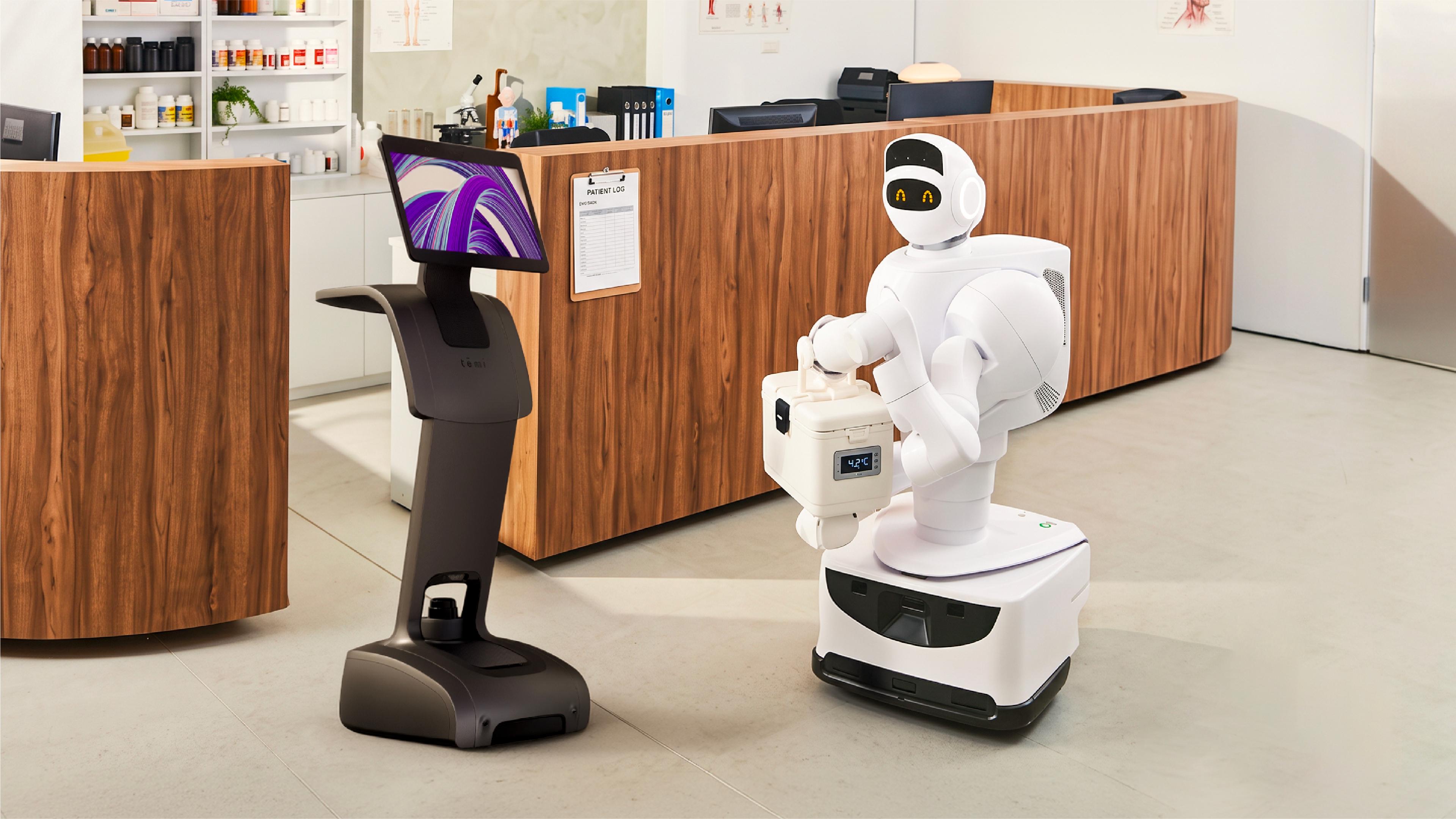
Aeolus Aeo and temiV3 are both self-governing service robots suitable for human-facing indoor deployment, but for their market data record at ROBOT24.com, Aeo and temiV3 are considered quite differently. Aeo is a wheeled service robot with two arms, designed to provide autonomous mobility and physical engagement. Temiv3 is a small mobile service and telepresence robot with a focus on communication, guidance, reminders, remote visitation and user engagement.
Aeolus Aeo and temiV3 are both self-governing service robots suitable for human-facing indoor deployment, but for their market data record at ROBOT24.com, Aeo and temiV3 are considered quite differently. Aeo is a wheeled service robot with two arms, designed to provide autonomous mobility and physical engagement. Temiv3 is a small mobile service and telepresence robot with a focus on communication, guidance, reminders, remote visitation and user engagement.
Both robots record elder-care and healthcare, the Aeo record features ability to open a door and elevator interaction along with allowing the robot to manipulate objects using its 7 degrees of freedom arms and multiple tools. The temiV3 record highlights a focus on video conferencing with reminders and remote monitoring.
At a Glance
| Metric | Aeolus Aeo | temi V3 / Temi record |
|---|---|---|
| Robot type | Autonomous wheeled dual-arm service robot | Autonomous mobile service / telepresence robot |
| Elder-care role | Physical assistance , monitoring, delivery and human-environment interaction | Communication, reminders, remote visitation, monitoring and guidance |
| Mobility | Autonomous wheeled base | Wheeled UGV / AMR |
| Height | 1.83 m recorded in current brochure dimensions | Approx. 100 cm |
| Weight | Not separately recorded in Robot24.com data technical specifications | Approx. 12 kg |
| Manipulation | Two 7-DOF arms with interchangeable attachments | No manipulation arms recorded |
| Payload | 2.9 kg per arm with flex gripper | Not recorded |
| Maximum speed | 95 cm/s | Approx. 1 m/s |
| Runtime | Approx. 9 h with standard flex gripper; approx. 6.5 h with 360° night-vision camera | Up to 8 h |
| Charging | Approx. 9 h from 10–95% while robot is on | Autonomous docking; charging time not recorded |
| Navigation | Autonomous navigation; doors and elevator interaction | ROBOX Navigation + 360° LiDAR; autonomous mapping and multi-room navigation |
| Perception | Vision/AI sensing, cameras, IR sensing; optional 360° night-vision camera | 360° LiDAR, depth cameras, RGB camera, obstacle sensors, cliff sensors, IMU |
| Human interaction | Mobile ARMS app and remote monitoring; physical manipulation | 10-inch touchscreen, 13 MP camera, 8-microphone array, Harman Kardon speakers, face/person tracking |
| Connectivity | Mobile-app access / remote monitoring recorded | Wi-Fi, Bluetooth, selected-model LTE, cloud connectivity |
| Availability | Commercially available through RaaS / leasing | Commercially available |
| Price in Robot24 record | Not publicly available | Approx. US$2,999 |
How They Compare
Physical interaction is the biggest difference. Aeo is capable of autonomous mobility and equipped with two articulated arms, so it is able to go beyond communication and monitoring into interacting with things and the environment. Its track record lists changeable end effectors, door opening and autonomous elevator operation.
Temi's record is the more social, remote-presence side of things. It offers reminders, HD video conferencing, visitation, person following, remote driving, remote monitoring with a touch screen, camera, microphone array and autonomous LiDAR-based navigation.
As a result, the two robots are then seen to do different portions of a workflow for elder care: Aeo, boasting increased physical-assistance and manipulation functions, and Temi, increased communication and telepresence capabilities and a user interface.
Summary
Both Aeo and Temi are designed for elderly-care settings, but they serve different roles. Aeo focuses on physical assistance and interacting with the environment, while Temi focuses on communication, telepresence, reminders and monitoring.
Both Aeo and Temi are designed for elderly-care settings, but they serve different roles. Aeo focuses on physical assistance and interacting with the environment, while Temi focuses on communication, telepresence, reminders and monitoring.
More articles on this topic
52 articles ReportPUDU BellaBot vs. UBTECH CADEBOT L100
 ReportFourier GR-3 vs. EngineAI SE01
 ReportPudu CC1 vs. KEENON KLEENBOT C30
 ReportDEEPRobotics Lynx M20 vs. Unitree B2-W
 ReportDEEPRobotics X30 Pro vs. Unitree B2
 ReportServe Robotics Delivery Robot vs. Cartken Courier
 ReportElliQ vs. LOVOT
 ReportLOVOT vs. PARO
 ReportKEENON BUTLERBOT W3 vs. Relay+
 ReportPUDU FlashBot vs. Relay+
 ReportPARO vs. Joy for All Companion Pet Cat
 ReportServe Robotics Delivery Robot vs. Starship Delivery Robot
Free Weekly
BUSINESS NEWS WEEKLY LETTER
The Weekly Letter for Robotics Professionals, Summarizing the Most Important Industry Moves, Launches, Deals and Signals.
120,000+ robotics professionals follow Robot24.com