The Rise of Delivery Robots: How They Work and Where They’re Headed
From city sidewalks all the way to university campuses, delivery robots are starting to become a lot more familiar. While robotics companies start experimenting with autonomous last-mile delivery, those machines are now beginning to change how deliveries reach their destination to the customers.
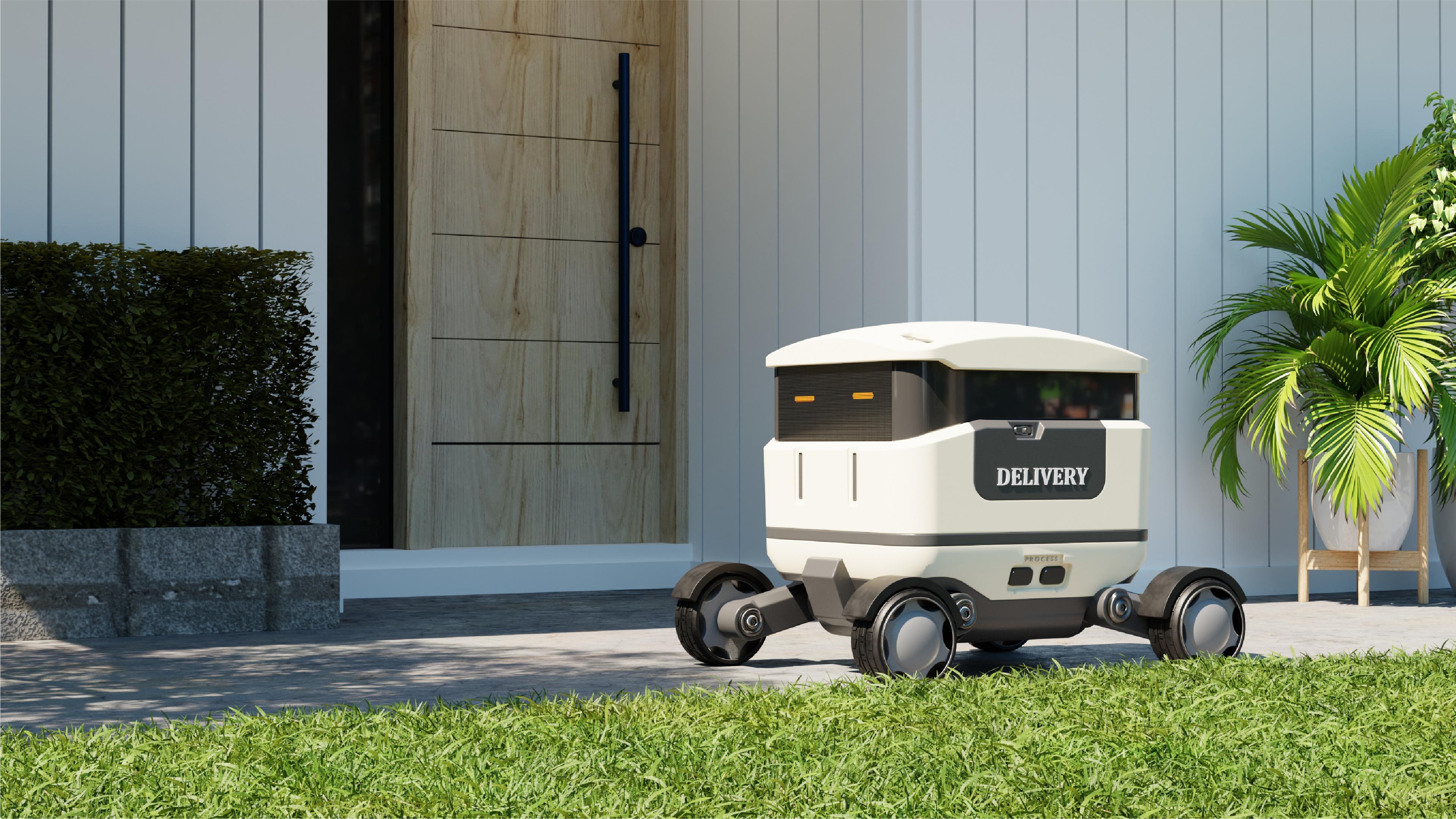
A few decades ago, food delivery was a highly human-powered operation. Today, couriers still play a major role, however autonomous robots are starting to take over part of the journey and are playing a massive role in delivery.
Delivery robots have now become a highly popular sight in some cities and even on university campuses, where they carry meals, groceries and packages directly to customers. There’s no doubt that the technology is still developing, but the idea is rather pretty simple – let robots handle the final stage of a delivery without the need for any driver whatsoever.
Food delivery comes only as a small part of the story. Several other delivery robots are also being utilized to transport parcels from point A to point B – meaning from distribution points all the way to the customers’ doors. While many people might find them charming, others are becoming rather less enthusiastic about sharing roads and public spaces with these machines.
So, how do these robots actually work, and why are companies really investing in them?
Here’s How They Work
This article focuses on delivery robots that are ground-based, which are sometimes referred to as rover delivery bots. However, several companies also use flying drones. Needless to say, both systems heavily rely on many of the same principles, meaning that they must avoid obstacles, navigate safely, and finally reach the correct destination.
Delivery robots generally use a combination of a few thing, and those are sensors, cameras, GPS, and eventually mapping systems. Together, these technologies really help the robot get a good idea of its surroundings, and establish where it needs to go and where its final destination is.
These robots are typical designed to operate autonomously, which means that they can make decisions without the need for any direct human control. Sensors can help detect movement as well as obstacles, whereas cameras capture extra visual detail about the environment. By using several sources of data, this helps the system respond a lot more accurately if at any given time, something unexpected appears in its path.
Mapping and GPS tools are also definitely highly essential when it comes to delivery, as they allow the robot to follow a planned specific route and help the operators track its location while delivering something.
An onboard computing system can bring all that information together, and eventually determines how the robot should respond. While some delivery robots rely on AI-based systems to improve decision-making, others, on the other hand, rely on more conventional autonomous-navigation software. Human operators may still be available to interfere if found necessary.
Starship Technologies
Starship Technologies is one of the first companies to develop and produce small autonomous delivery robots on a large scale. The company started developing its robots in 2014, with the adoption highly increasing during the COVID-19 pandemic, according to Engadget.
Since that time, delivery robots have now become a lot more common, and other companies have jumped into the market. For example, DoorDash has developed its own delivery robot called Dot.
Starship robots have since been deployed on university campuses, where short-distance food delivery is a natural fit for the technology.
Starship robots are used for campus deliveries at Oregon State University in Corvallis, where approximately 80 robots reportedly completed an estimate of 1,000 deliveries a day.
They are also being used at Purdue University. The Robot Report cited a 2025 survey, in which students at dozens of universities responded with high positivity about robot deliveries. Amelia Ott, who was a junior at Purdue University at the time, described the robots as being very useful and reliable, saying: “They’re an easy, reliable way to get meals.” She also emphasized on their ability to be able to operate consistently in poor weather and also across different terrain.
Starship has also partnered with Uber Eats, a food delivery application. The service launched in the UK back in December 2025, with plans to further expand into additional European and US markets.
Other Delivery Robots
Autonomous delivery is now being tested extensively in Los Angeles as well.
Serve Robotics has deployed approximately 500 delivery robots in the city by May 2026, according to The Guardian. Small wheeled robots carrying the deliveries have been seen transporting food and other items through residential streets and neighbourhoods.
Many of those delivery robots are purposely designed to look approachable, by having lights, simple “faces,” and rounded bodies. This friendly design, however, does not mean everyone is a fan of them.
Several residents and businesses have complained that the robots clog busy pedestrian areas, cause congestion, and sometimes get in the way.
Lula Ochoa, a barista and server at Pazzo Gelato, said that the area can sometimes “get congested”, telling The Guardian that the robots can block foot traffic, and also that children occasionally intervene with them.
On the other hand, DoorDash’s Dot has a completely different approach when it comes to design. The red robot possesses a taller profile and has two front-facing lights that resemble eyes. DoorDash had introduced Dot in Arizona back in September 2025, and has since expanded testing to different locations, like Fremont, California.
The Pros and Cons
People who support delivery robots point towards several potential advantages that come with the service.
They can operate in conditions that just might be uncomfortable for human drivers and can reduce direct contact between customers and delivery workers. Electric delivery robots also have the ability to reduce the need for short car journeys, which in turn may help lower emissions in some cases.
However, the technology can also create several challenges.
Delivery robots have sometimes been involved in crashes, blocked pavements or gotten stuck at places like construction zones and damaged sidewalks.
Their presence in many places can also create concerns over accessibility in crowded or narrowed public spaces. A few universities have also previously decided to pull delivery robots from campus grounds after safety concerns and operational issues or glitches.
The issue here is not just simply whether the robots can move from point A to point B. They must also be able to coexist safely and peacefully with pedestrians, and share spaces with wheelchair users, cyclists, pets and the other unpredictable parts of daily street life.
So What Comes Next?
Robot delivery is still new and a relatively young industry, but it has been slowly spreading and expanding over the last couple of years.
Delivery robots have already been operating on some university campuses and in some certain urban neighbourhoods, where short, easy, and predictable routes simply make automation easier.
The next challenge that this industry faces is scale. There’s no doubt that companies will simply need to improve its delivery systems, from navigation and safety to reliability and accessibility before the robots can truly become a common sight everywhere, all the while still needing to deal with public acceptance and local regulations.
For now, human drivers, couriers and riders still remain essential to the job. But as the technology grows and improves, small autonomous machines may eventually end up taking over more of the last mile, rolling along the pavement all the way to people’s doorsteps.
The biggest question is not simply whether delivery robots can work, but rather how well they can fit into everyday life. Their future will depend on whether they will succeed in becoming more reliable, safer, and easier to share public spaces with, while still being able to successfully offer a practical advantage over traditional delivery.
More articles on this topic
157 articles ReportOctopus-Inspired Muscle Design Simplifies Dexterous Soft Robots
 Report5 Jobs Robots Could Take Over by 2035 — And 5 They’ll Struggle to Replace
 ReportNvidia Develops Safety Controls as AI Advances Into Robotics
 ReportWhy aren't robots in our homes yet?
 ReportFlourish Opens Preorders for $3,555 Trainable Home Robot
 ReportHow Do Robots See the World?
 Report6 Unusual Jobs Done By Robots
 ReportRLWRLD Expands Physical AI Push for Industrial Robots
 ReportCircus SE Partners With Royal Prestige for UAE Food-Robot Launch
 ReportSix Giant Robots from Around the World
 ReportThree Real Robots Inspired by Star Wars
 ReportJobs You Didn't Know Were Done by Robot Dogs
BUSINESS NEWS WEEKLY LETTER
The Weekly Letter for Robotics Professionals, Summarizing the Most Important Industry Moves, Launches, Deals and Signals.