From Lab to Home: Why Fourier Humanoids Aren’t Ready for Deployment Yet
Fourier has recently moved from manufacturing robots, focusing on rehabilitation therapy scenarios to robots that can potentially become part of everyday lives.

July 21, 2026 by Siyanne
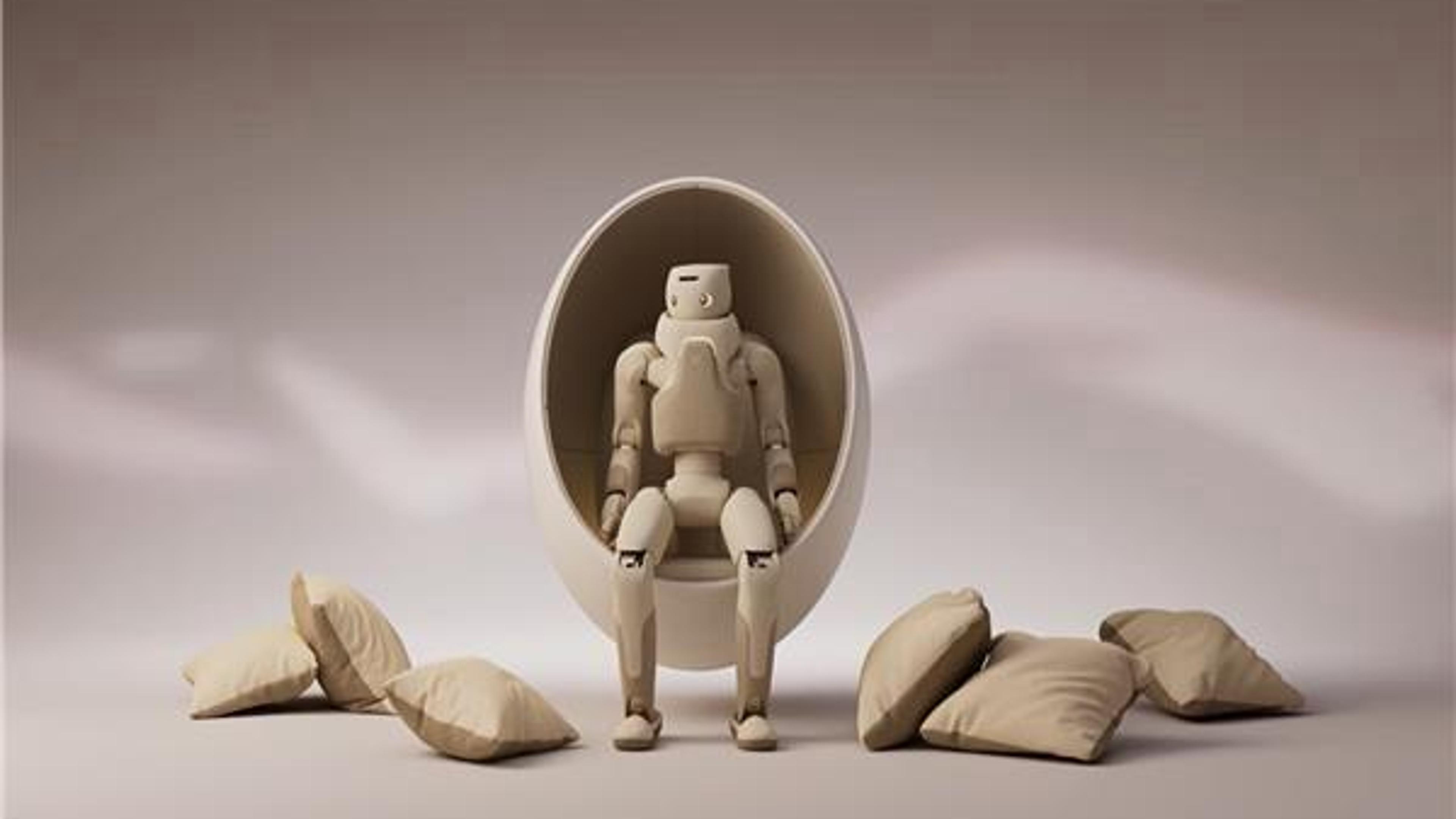
The CEO of Fourier Gu Jie, said that strict safety certification requirements are one of the challenges to home deployment. The limitations faced in model generalization capabilities also pose limitations. Understanding unclear semantics, multi-robot coordination capabilities and spatial recognition were said to be the three core challenges of deployment of Fourier’s robots in more real-life settings.
The need for high reliability in controlling speed and force as well as obstacle avoidance is way higher in elderly housing settings. In non-hospital environments robots are required to enter unfamiliar rooms to perform tasks. This makes generalization of models even more challenging. Large models tend to be more coherent in virtual space than in the physical world. This, Gu believes, can be overcome by allowing them to explore the real world.
Fourier has recently moved from manufacturing robots, focusing on rehabilitation therapy scenarios to robots that can potentially become part of everyday lives. The company built the GRW wheeled dual-arm robots for assistance that requires heavy lifting; the GR Mini focuses on providing public services. The GR Nano is designed for personal companionship.
Unlike traditional robots, Fourier’s ‘Embodied Home’ technology solution uses a big language model to change vague semantics into a standard, applicable workflow that can be executed. It starts by recognizing and understanding the need for water. Then it proceeds to execute the task based off of contextual common sense. This is a stride forward for traditional service robots that are normally capable of performing singular commands like going to a prespecified location and grabbing a prespecified object.
Robot24.com Business News TAKE:
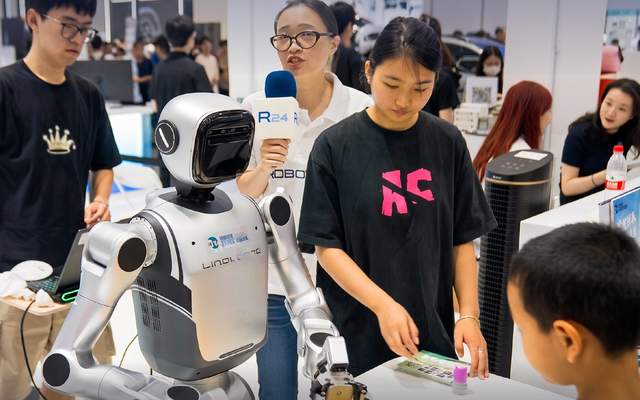
Fourier is candid about the gap between a lab demonstration and a home deployment at this year’s World Artificial Intelligence Conference (WAIC). When it comes to selecting smart devices for elderly care institutions, practicality trumps cutting-edge technology. It’s more important that hardware come with simple technology and be pragmatic for these institutions.
Although the industry remains cautious about robots entering homes, the elderly care robotics industry is growing. The gradual rollout path from hospitals to institutions to homes is becoming increasingly apparent, while the rate of AI-robot integration is seen as the biggest variable in the industry over the next three to five years.
More articles on this topic
156 articles ReportChina Is Sending Humanoid Robots To School
 ReportOctopus-Inspired Muscle Design Simplifies Dexterous Soft Robots
 Report5 Jobs Robots Could Take Over by 2035 — And 5 They’ll Struggle to Replace
 ReportNvidia Develops Safety Controls as AI Advances Into Robotics
 ReportWhy aren't robots in our homes yet?
 ReportFlourish Opens Preorders for $3,555 Trainable Home Robot
 ReportHow Do Robots See the World?
 Report6 Unusual Jobs Done By Robots
 ReportRLWRLD Expands Physical AI Push for Industrial Robots
 ReportThis AI Robot Is Learning To Pick Tomatoes Like A Human
 ReportHumanoid Robots Join Human Dancers As WorldSkills 2026 Opens In Shanghai
 ReportRobot Dog Completes Full Marathon on a Single Battery Charge
BUSINESS NEWS WEEKLY LETTER
The Weekly Letter for Robotics Professionals, Summarizing the Most Important Industry Moves, Launches, Deals and Signals.