South Korea Proposes $39 Million for Robot Actuators, Humanoid Batteries and AI Sensors
South Korea’s 2027 budget proposal targets robot actuators, eight-hour humanoid batteries and on-sensor AI chips, aiming for 80 percent domestic sourcing of core robot components by 2030.

November 14, 2026 by Dr Maulik Vyas
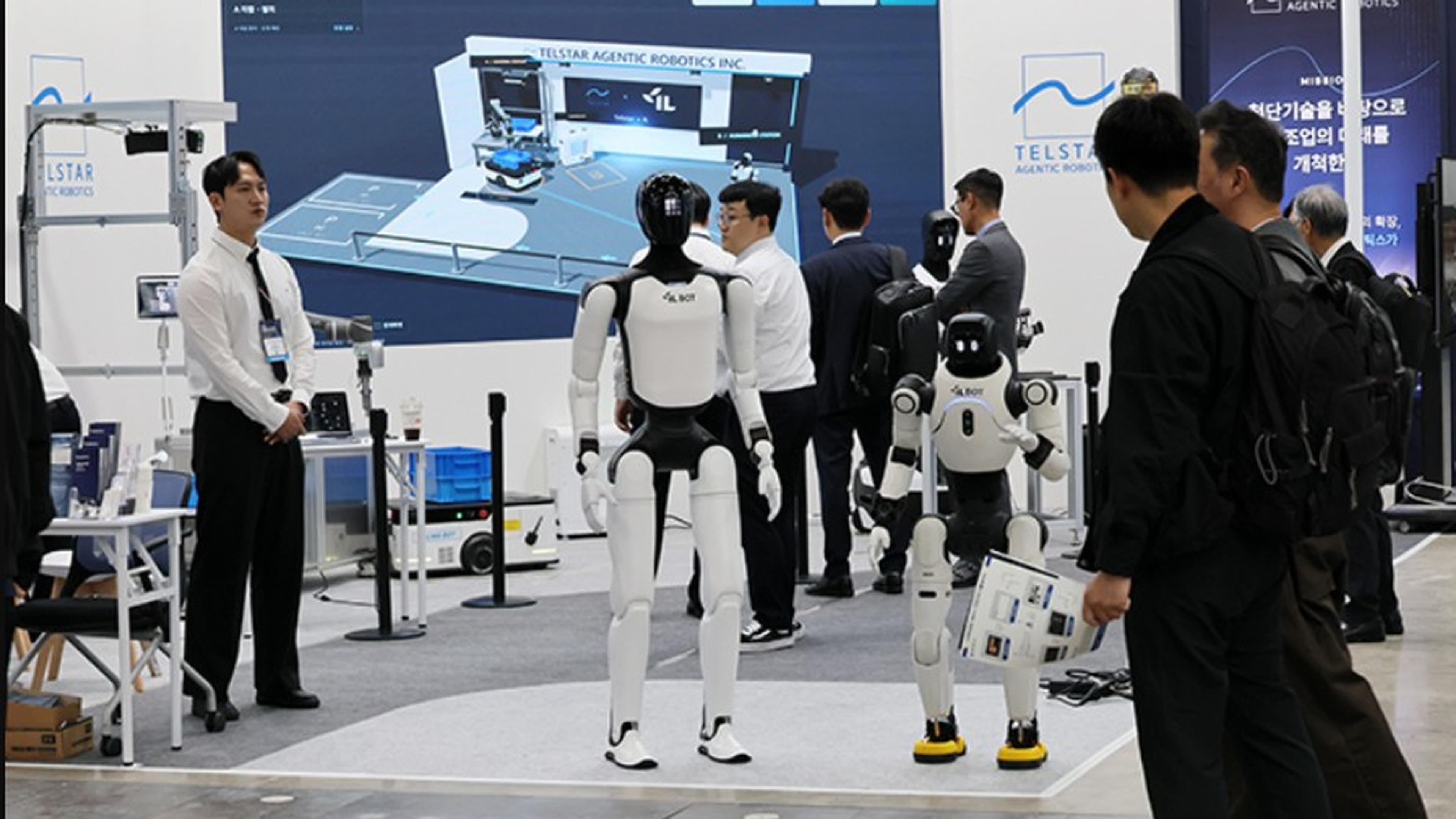
South Korea aims to develop three core physical AI technologies with some $39 million in funding proposed for 2027. Core robot components including actuators would receive 30 billion won ($22.4 million) of the proposed funds while 13.3 billion won ($10 million) would go to developing humanoid batteries and 9 billion won ($6.7 million) would be allocated to on-sensor AI semiconductors. The budget proposals were unveiled at an emergency economic ministers’ meeting in Seoul on Nov. 11, chaired by Deputy Prime Minister and Finance Minister Lee Hyung-il.
To improve the performance of the actuators (components that enable a robot’s arms, legs and fingers to move), the government plans to invest 100 billion won (approx. US$74.8 million) in three years from 2027. The components are to produce about five times as much force at the same weight as before and withstand more than one million repetitions of use. Of the 30 billion won (approx. US$22.4 million) allocated for the proposals in 2027, about 3 billion won (approx. US$2.24 million) will be used for demonstrations of the robot parts at manufacturing sites of humanoid robots, to check their durability, precision and safety. Domestic production of the core robot components will begin in 2029, and by 2030, large-scale production and exports will take place, with 80% local sourcing rate core robot components.
The 13.3 billion won of funding proposed for the battery will be allocated to 8 different projects that look to improve the commercial usability of batteries currently in use, and 10 different projects for the development of solid-state batteries as well as industry standards. These batteries will be required to be able to power a humanoid robot for 8 hours of continuous usage and then also have the ability to go into high power usage for short periods of time. Such commercial batteries are hoped to be released by 2030.
The 9 billion won for on-sensor AI semiconductors, which can be used in the robotics, defense and mobility markets, is the first year of a 49.8 billion won (about $37.3 million) development program running from 2027 through 2030, with system demonstrations scheduled for 2030.
The three initiatives are part of the new physical AI programs announced in July as part of the Super-Innovation Economy Leading Project and the task force for each of the three initiatives will hold a meeting by end of 2026 and identify industry needs and review financial, tax and other measures to support the development of core technologies through related administrative measures.
These are proposed budgets that could change, and right now there is no word on which particular companies will be participating.
More articles on this topic
278 articles ReportWhat it Really Costs to Own a Personal Assistant Robot at Home
 ReportHumyn Labs Raises $47 Million to Build Real-World Training Data for Robotics
 ReportBoston Dynamics Selects GlobalFoundries as First Semiconductor Customer for Atlas Humanoid Trials
 ReportGenesis AI Raises $500 Million at a $3.5 Billion Valuation to Scale General-Purpose Robots
 ReportMultiway Robotics Showcases Intralogistics Solutions and Wheeled Humanoid at CeMAT ASIA
 ReportFORT Robotics Files Registration Statement for Public Listing Partnership
 ReportRobot Baristas are Learning to Reproduce the Art of Professional Coffee Making
 ReportTARSBOT and Aptiv Plan to Deploy 100 Industrial Robots Across 33 Factory Applications
 ReportLoongson Completes ROS 2 Integration on Its Domestic Computing-Powered Intelligent Robot Vehicle
 ReportBoston Dynamics Puts Wheels on Atlas Humanoid to Test Reinforcement Learning and Motor Limits
 ReportAnt Group Open-Sources LingBot-Touch to Give Robots a Shared Sense of Touch
 ReportArrive AI Invests in Ottonomy with Plans for 50 Autonomous Delivery Robots
BUSINESS NEWS WEEKLY LETTER
The Weekly Letter for Robotics Professionals, Summarizing the Most Important Industry Moves, Launches, Deals and Signals.