ETH Zurich Engineers Create Tiny Robots Powered by Mouse Muscle
ETH Zurich researchers have developed tiny biohybrid robots powered by lab-grown mouse muscle, enabling them to walk, jump, swim and grasp objects without conventional motors or gears.
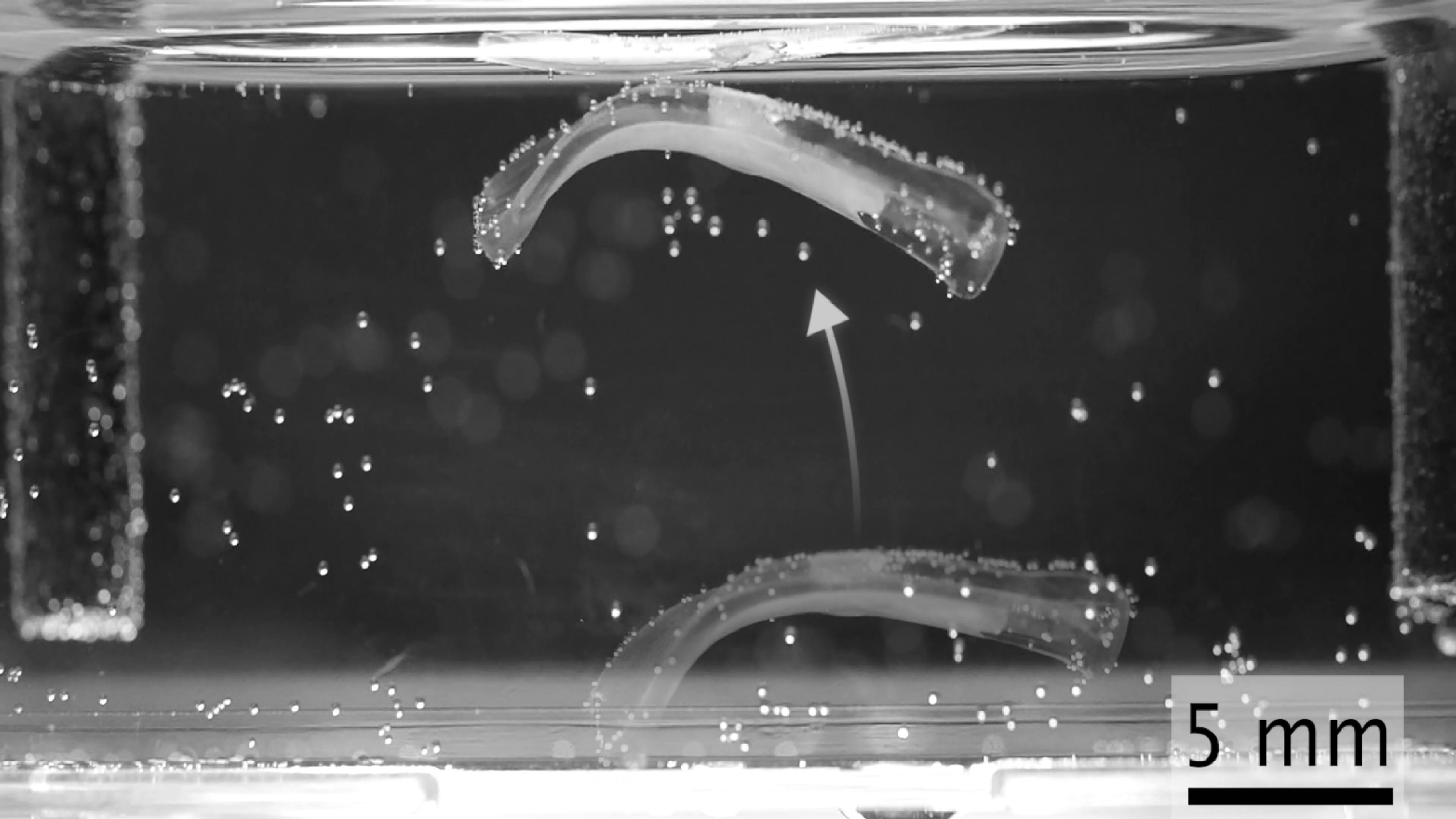
Forget motors and gears. ETH Zurich’s tiny robots use living mouse muscle to walk, jump, swim and grasp objects.
Conventional robots rely on rigid motors, heavy gears, and batteries to generate movement. However, researchers at ETH Zurich are challenging this by engineering miniature biohybrid robots powered entirely by living tissue.
By utilizing lab-grown mouse muscle, the team has created tiny machines capable of walking, jumping, swimming, and grasping objects with unprecedented agility.
A Unified Biological Design
The secret to the robot's mobility lies in its 3D-printed hydrogel framework. Rather than growing the skeletal muscle separately and attempting to attach it later, researchers used advanced computer simulations to design the tissue and its soft, water-rich support structure.
The resulting hydrogel scaffold features microscopic grooves that allow the muscle fibers to align and anchor themselves perfectly. This integrated setup provides a precise mechanical structure for the biological tissue to pull against, ensuring that minimal contractile energy is lost. Measuring just 1.5 centimeters, these advanced bioactuators deliver 11 times more movement than previous biohybrid systems using the same amount of muscle tissue.
Record-Breaking Mobility
This efficiency translates into remarkably powerful movements for such a small system. A single muscle contraction can propel the actuator 5 millimeters into the air – roughly one-third of its body length.
When configured for ground movement, the walking variant sets a new standard for its class by covering 6.2 millimeters per second relative to its body length. The same engineering principles allow these muscle-powered machines to swim smoothly through liquid and deftly interact with surrounding objects.
Constraints of Living Systems
Despite these breakthroughs, the biohybrid robots are currently confined to laboratory environments due to fundamental biological limitations:
-
Nutrient Dependency: The lab-grown muscles lack blood vessels and must be continuously submerged in a specialized nutrient bath to survive. Scaling the robots to a larger size is impossible without engineering an artificial circulatory system capable of delivering oxygen and removing metabolic waste.
-
Developmental Variances: Growing uniform biological tissue remains difficult. The way lab-grown muscles mature and contract varies from one batch to another, making precise control and standardized manufacturing a major hurdle.
If these obstacles can be overcome, future engineers may shift away from traditional mechanical motors in favor of self-healing, soft bio-machines perfectly optimized for delicate medical operations or fragile natural ecosystems. For now, these tiny muscle-powered innovators are taking their first steps inside the lab.
More articles on this topic
278 articles ReportWhat it Really Costs to Own a Personal Assistant Robot at Home
 ReportHumyn Labs Raises $47 Million to Build Real-World Training Data for Robotics
 ReportBoston Dynamics Selects GlobalFoundries as First Semiconductor Customer for Atlas Humanoid Trials
 ReportGenesis AI Raises $500 Million at a $3.5 Billion Valuation to Scale General-Purpose Robots
 ReportMultiway Robotics Showcases Intralogistics Solutions and Wheeled Humanoid at CeMAT ASIA
 ReportFORT Robotics Files Registration Statement for Public Listing Partnership
 ReportRobot Baristas are Learning to Reproduce the Art of Professional Coffee Making
 ReportTARSBOT and Aptiv Plan to Deploy 100 Industrial Robots Across 33 Factory Applications
 ReportSouth Korea Proposes $39 Million for Robot Actuators, Humanoid Batteries and AI Sensors
 ReportLoongson Completes ROS 2 Integration on Its Domestic Computing-Powered Intelligent Robot Vehicle
 ReportBoston Dynamics Puts Wheels on Atlas Humanoid to Test Reinforcement Learning and Motor Limits
 ReportAnt Group Open-Sources LingBot-Touch to Give Robots a Shared Sense of Touch
BUSINESS NEWS WEEKLY LETTER
The Weekly Letter for Robotics Professionals, Summarizing the Most Important Industry Moves, Launches, Deals and Signals.