Inside Lightberry’s $39,990 Bet on a more social humanoid
A humanoid robot does not have to spend its day moving boxes, welding car parts or working on a factory floor. Lightberry is betting it can do something else: talk to people.

September 7, 2026 by Nisha
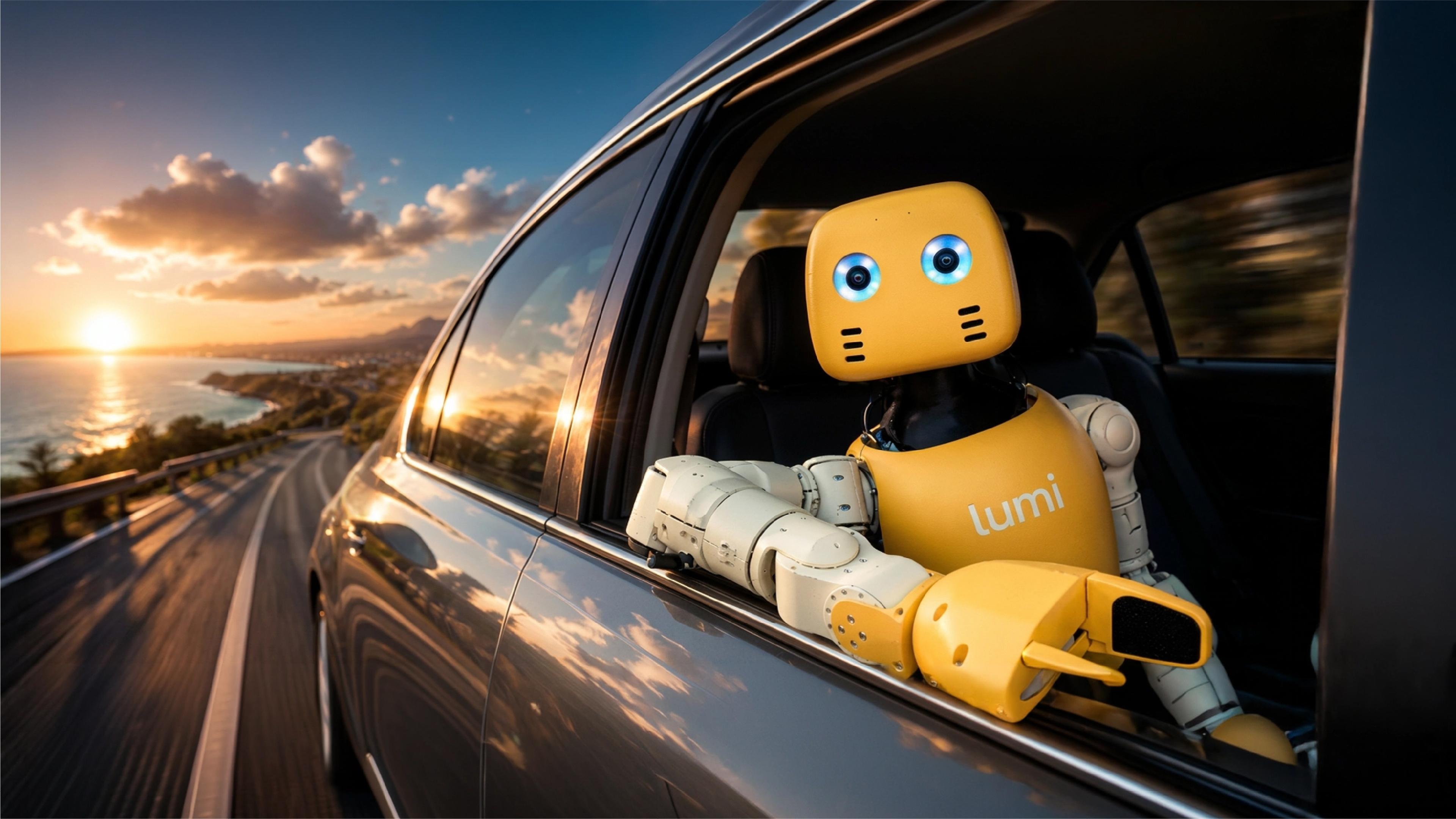
San Francisco – Lightberry, the San Francisco startup has opened reservations for Lumi, a humanoid robot built with human interaction at the center of its pitch. Lightberry lists the robot at $39,990 and says it is scheduled to ship in 2026.
According to Lightberry, Lumi is designed to hold conversations, answer questions, tell stories, take photos, look up information, entertain crowds and guide people.
Rather than making conversation a secondary feature on a robot built mainly for physical work, Lightberry is making it a central part of Lumi's appeal.
That could make the robot a fit for places such as events, showrooms and public venues, where answering questions, providing information or engaging visitors may matter more than lifting heavy objects.
The software is a part of the pitch
Lumi is not a humanoid that Lightberry has built entirely from scratch.
The company says it combines its own sensors and software with a G1-compatible body. The robot stands about 1.3 meters tall, weighs roughly 40 kilograms and has 34 degrees of freedom.
Much of what makes Lumi different, however, sits in the software.
Through the Lightberry SDK, customers can connect external tools and create new behaviors. The company also says Lumi's personality, voice, knowledge and movements can be customized using natural-language interaction.
Lightberry is also positioning the robot as something customers can use without having to build the entire robotics stack themselves. The company says Lumi is designed to work out of the box, with customers able to customize its behavior to suit their needs.
Lumi also has a rounded body and bright yellow finish, giving it a more character-driven look than the industrial robots that dominate much of the robotics industry.
Lightberry lists stereo cameras, a beamforming microphone array and an NVIDIA Jetson Thor computer with 64 GiB of memory. The 421 Wh battery is rated for about 2.5 to 3.5 hours of operation.
A different market for humanoids
Lumi's pitch is ultimately less about replacing a worker and more about putting a robotic presence into a human-facing environment.
A robot that can answer a visitor's questions, take a photograph or entertain a crowd has a very different value proposition from one designed to move parts around a factory. That could open another lane for humanoid robots, particularly in places where interacting with people is part of the job.
Lightberry says the robot is scheduled to ship in 2026 and has launched '100 Founder Edition’ Lumis and is being offered through reservations.
More articles on this topic
156 articles ReportOctopus-Inspired Muscle Design Simplifies Dexterous Soft Robots
 Report5 Jobs Robots Could Take Over by 2035 — And 5 They’ll Struggle to Replace
 ReportNvidia Develops Safety Controls as AI Advances Into Robotics
 ReportWhy aren't robots in our homes yet?
 ReportFlourish Opens Preorders for $3,555 Trainable Home Robot
 ReportHow Do Robots See the World?
 Report6 Unusual Jobs Done By Robots
 ReportRLWRLD Expands Physical AI Push for Industrial Robots
 ReportCircus SE Partners With Royal Prestige for UAE Food-Robot Launch
 ReportSix Giant Robots from Around the World
 ReportThree Real Robots Inspired by Star Wars
 ReportJobs You Didn't Know Were Done by Robot Dogs
BUSINESS NEWS WEEKLY LETTER
The Weekly Letter for Robotics Professionals, Summarizing the Most Important Industry Moves, Launches, Deals and Signals.