Inside San Francisco's Robot Housekeeping Experiment
Tau Robotics is deploying $55,000 humanoids to clean homes, but the machines still heavily rely on remote human operators.
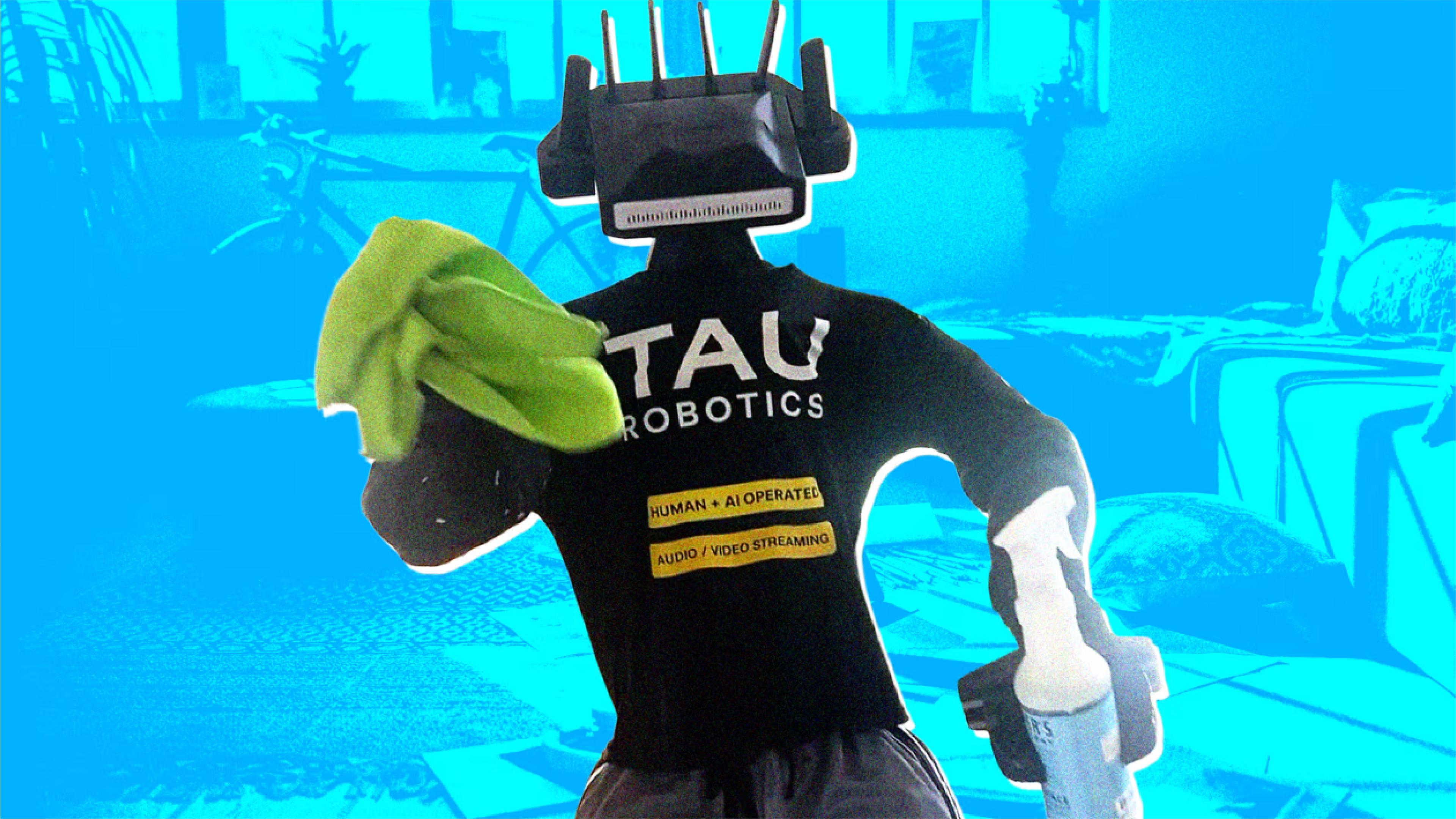
Humanoid robots are already cleaning homes In San Francisco, vacuuming and wiping down surfaces, attending to the ordinary chores of the day. Yet for all their appearance, there is something less futuristic about what is at work behind them: a human operator calling the shots.
Tau Robotics, a San Francisco startup founded in 2024, has a home-cleaning service built around Unitree G1 humanoids it has put its own modifications on. A MarketWatch report puts the price tag on an uncustomised machine at around $55,000. The company’s present booking system calls for two robots for a one-hour session at $60, or $30 for just one.
It is an invitation-only service while Tau amasses real world data for the AI systems that will one day be able to do without an operator. Ted Pinkerton, the founding engineer, was accompanied by Bolo and Sergey, a pair of humanoids, when MarketWatch made a visit to see them put through their paces in a local apartment. They mopped, vacuumed and wiped surfaces, demonstrating that they could complete basic household chores with remote assistance.
But more demanding activities proved difficult. Folding laundry is a slow process; the report notes a towel will take four minutes to be folded and a pair of jeans over a minute. Even loading the dishwasher is no easy matter and demands some deft positioning. There have been broken dishes to account for as well, according to Tau.
To date, the company has eight humanoids in operation and close to 100 cleaning jobs under its belt, amounting to roughly 160 hours of paid time. Those figures show that the machines are being used in customers' homes, although their performance still depends heavily on human involvement.
An operator has cameras on each robot to relay footage and direct it. That video also doubles as training material for AI down the road per the privacy policy, and though a customer may have it deleted, collection is a required part of the service. As for the microphones, Tau says they are off so operators are not privy to what is said in the home.
However, the cameras are still recording people and the room in which they are working, which gives pause for thought on the matter of privacy when one lets a remotely run machine in.
Tau is now aiming to reach the point where it has general-purpose robots for the house that do not require constant oversight. In the meantime, the cleaning service is a way to make revenue and to gain experience in settings a lab cannot replicate.
It is a case study in what household humanoids are capable of at present. They can handle some of the daily grind, but issues of speed and autonomy and privacy are yet to be resolved. The biggest development may come when those machines no longer need someone directing their every move.
More articles on this topic
278 articles ReportWhat it Really Costs to Own a Personal Assistant Robot at Home
 ReportHumyn Labs Raises $47 Million to Build Real-World Training Data for Robotics
 ReportBoston Dynamics Selects GlobalFoundries as First Semiconductor Customer for Atlas Humanoid Trials
 ReportGenesis AI Raises $500 Million at a $3.5 Billion Valuation to Scale General-Purpose Robots
 ReportMultiway Robotics Showcases Intralogistics Solutions and Wheeled Humanoid at CeMAT ASIA
 ReportFORT Robotics Files Registration Statement for Public Listing Partnership
 ReportRobot Baristas are Learning to Reproduce the Art of Professional Coffee Making
 ReportTARSBOT and Aptiv Plan to Deploy 100 Industrial Robots Across 33 Factory Applications
 ReportSouth Korea Proposes $39 Million for Robot Actuators, Humanoid Batteries and AI Sensors
 ReportLoongson Completes ROS 2 Integration on Its Domestic Computing-Powered Intelligent Robot Vehicle
 ReportBoston Dynamics Puts Wheels on Atlas Humanoid to Test Reinforcement Learning and Motor Limits
 ReportAnt Group Open-Sources LingBot-Touch to Give Robots a Shared Sense of Touch
BUSINESS NEWS WEEKLY LETTER
The Weekly Letter for Robotics Professionals, Summarizing the Most Important Industry Moves, Launches, Deals and Signals.