Quadrupeds Are Learning to Navigate Smoke-Filled Tunnels
Researchers in Spain are testing quadruped in smoke-filled tunnels to help rescuers locate victims and navigate dangerous environments.
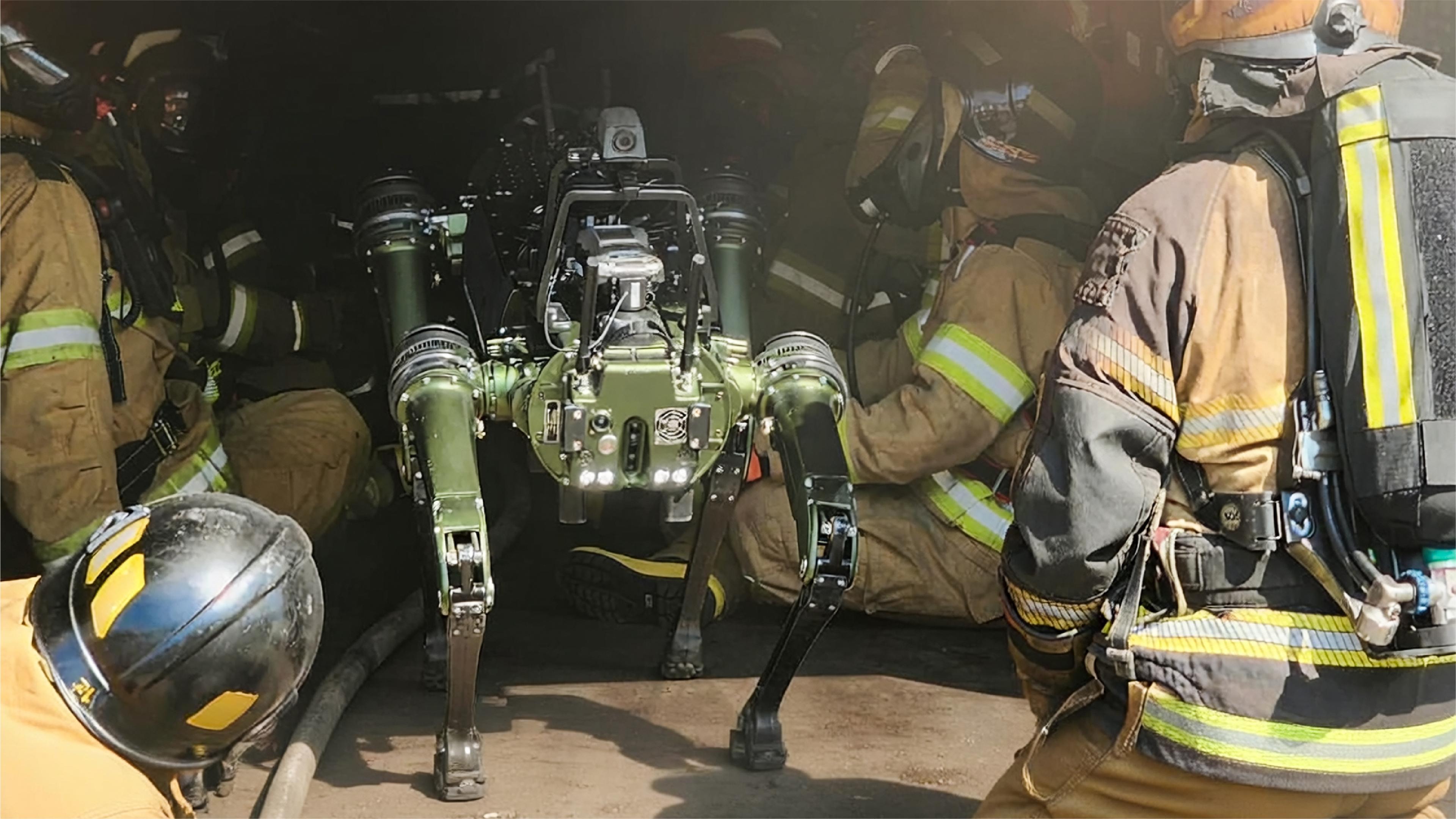
In Spain, researchers are putting quadrupeds to the test in smoke-laden tunnels. The technology they are after is one that will enable emergency personnel to size up a hazardous situation and find any who may be trapped prior to having rescuers go in.
This is all under the auspices of UNDERAIBOT, a project out of Spain whose aim is to put together the kind of sophisticated navigation and sensing systems needed for four-legged robots to work underground.
A Ghost Robotics Vision 60 was put through its paces by researchers in June 2026 at the Santa Bárbara Foundation in León, Spain. To give a sense of what emergency responders have to contend with below ground, the quadruped was made to deal with conditions such as active fire and thick smoke, poor communications and terrain that is anything but even during the trials.
The robot is equipped with a sensor array of thermal imaging, radar, LiDAR and standard cameras, says the Aragon Institute of Technology (ITA). With LiDAR, one can map what is around by means of laser pulses. The purpose of having all of these in place is to give the robot an appreciation of its environment where, for instance, smoke would render a normal camera of little use.
Navigation presents major difficulty. With GPS signals lacking in the confines of an underground tunnel, robots are put to the task of ascertaining where they are by way of their own sensors and charting out new territory.
The system was put through its paces in June for some tests that proved the researchers were right about its 3-D mapping and localization. In conditions of low visibility, they ran checks on such things as the ability to spot machinery or a heat source, and to identify any victims.
There is more to the project than a matter of putting a robot in a tunnel. What it is really intended to do is supply rescue teams with intelligence on conditions that are not safe for them to make an assessment of.
With environmental sensors at its disposal, the robot has the capacity to detect any hazardous gases or obstructions, and in so doing offer a better sense of the location of those who may be trapped.
In September 2026, the UNDERAIBOT team put a Unitree A2 quadruped to work in yet another set of underground trials. The testing this time was done in the aftermath of an actual blast, so there was dust and smoke to contend with as well as gases and debris. It was an opportunity for the researchers to see if they could improve communications, localization and the way the operator is guided within the tunnel.
There are some encouraging results, but the publicly reported tests do not truly establish whether the robots can independently complete a full rescue mission or operate reliably across every emergency scenario.
Yet the project has considerable promise. For an underground emergency, it is often a matter of knowing what is in front of you. A robot able to go into a dangerous tunnel and chart the area, then pass on the details to rescuers, means those on the ground can make more sound decisions without having to put themselves at risk right away.
The work is being done by ITA, with support from the Spanish firms OSSA and ALISYS, and backed by funds from the European Union and Spain’s State Research Agency.
More articles on this topic
278 articles ReportWhat it Really Costs to Own a Personal Assistant Robot at Home
 ReportHumyn Labs Raises $47 Million to Build Real-World Training Data for Robotics
 ReportBoston Dynamics Selects GlobalFoundries as First Semiconductor Customer for Atlas Humanoid Trials
 ReportGenesis AI Raises $500 Million at a $3.5 Billion Valuation to Scale General-Purpose Robots
 ReportMultiway Robotics Showcases Intralogistics Solutions and Wheeled Humanoid at CeMAT ASIA
 ReportFORT Robotics Files Registration Statement for Public Listing Partnership
 ReportRobot Baristas are Learning to Reproduce the Art of Professional Coffee Making
 ReportTARSBOT and Aptiv Plan to Deploy 100 Industrial Robots Across 33 Factory Applications
 ReportSouth Korea Proposes $39 Million for Robot Actuators, Humanoid Batteries and AI Sensors
 ReportLoongson Completes ROS 2 Integration on Its Domestic Computing-Powered Intelligent Robot Vehicle
 ReportBoston Dynamics Puts Wheels on Atlas Humanoid to Test Reinforcement Learning and Motor Limits
 ReportAnt Group Open-Sources LingBot-Touch to Give Robots a Shared Sense of Touch
BUSINESS NEWS WEEKLY LETTER
The Weekly Letter for Robotics Professionals, Summarizing the Most Important Industry Moves, Launches, Deals and Signals.