Radioactive Mess? Better Call Spot
Would you like me to find the original source article and its link for this excerpt about Spot, the robot used for radioactive contamination sampling at Sellafield, or fact-check the excerpt against published sources?
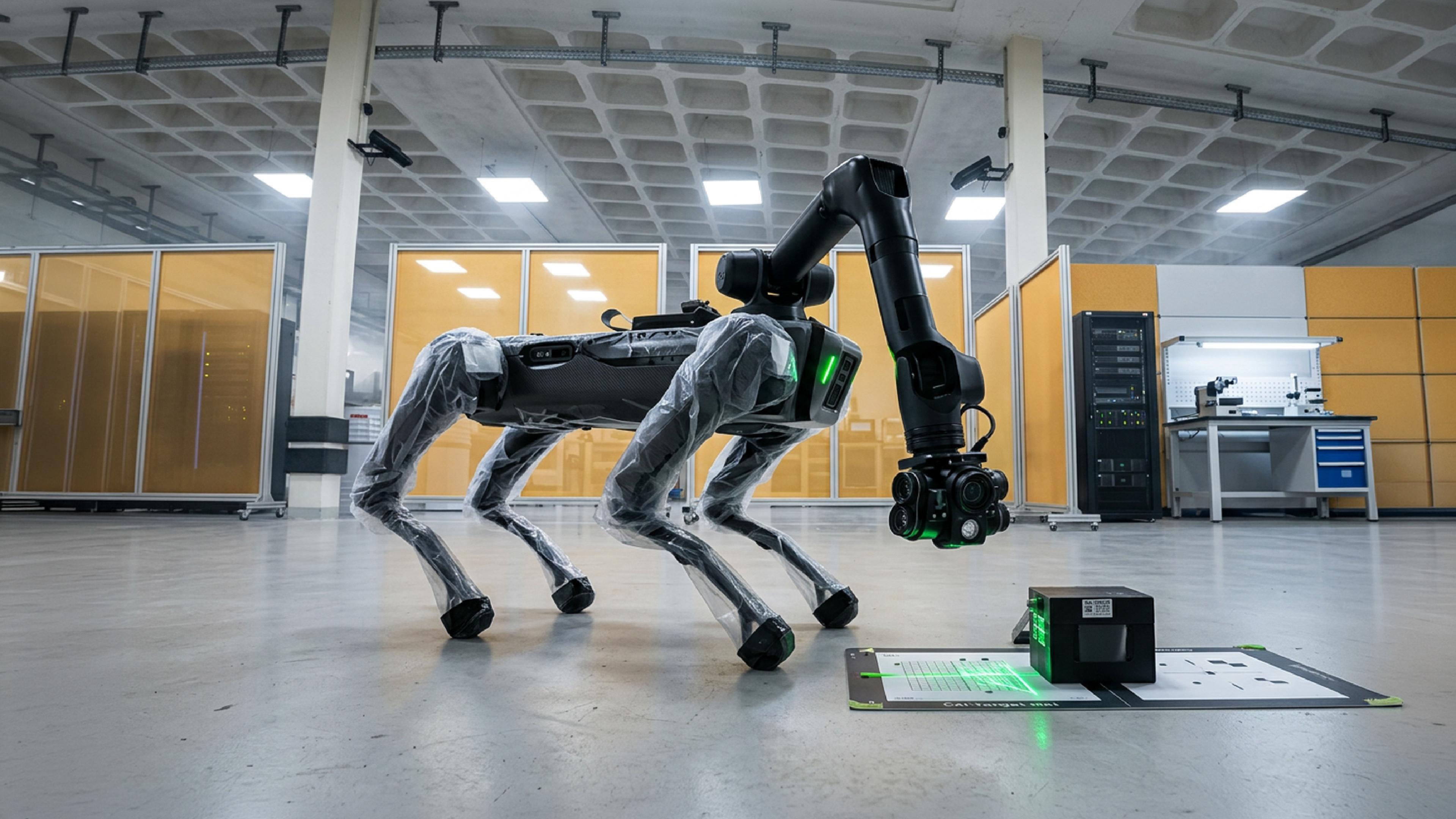
It’s good manners to clean up if you spill, but it’s better sense to avoid the mess if it’s radioactive and call in the expert, in this case, Spot the robot.
And that’s exactly the case at Sellafield, the UK nuclear site where a quadruped of the Spot variety has been put through its paces with an innovation for gathering contamination in hazardous territory. It can do the job without a human following it with a swab.
Spot-On Sample Collection
The device is the product of the UK’s Robotics & AI Collaboration (RAICo). With this attachment, Spot can do what would otherwise be left to a health physics team, swab surfaces for any sign of radioactivity. On a given day these teams will have put down hundreds of swabs with their circular paper filters as part of the routine monitoring of radiation. The data they produce is what ensures safety regulations are observed and steers decommissioning efforts.
But one cannot simply touch the surface and call it a swab. There is a certain controlled motion required to get a sample of value, and the new tool is designed to meet that very requirement.
The Right Hand for a Risky Mess
What you get is an attachment that will mimic the curved motions of a human operator. Custom software puts the manipulator on Spot to work from commands it receives via a haptic controller picking up the operator’s every move in real time.
During a trial, Spot was let into a restricted zone to deal with a simulated radiological spill. After making its approach, it swabbed a surface laced with blue chalk standing in for the real thing and made off with a sample. A success of a test, proving the job can be done remotely with no loss of accuracy or safety. In other words, the thinking is still done by a person, while the robot takes the risk.
The Future of Decommissioning Is Safer
With its stability and agility, Spot can get to where personnel would find it hard or dangerous to go. This kind of technology stands to limit the number of times people have to risk their lives during nuclear decommissioning. Sellafield is not the only place it could be of use. An inactive test at Culham’s Joint European Torus facility in 2025 has already shown the way for fusion engineering and decommissioning work.
So, when it comes to getting the job done, robots don’t have to replace humans. Sometimes, they just need to take on the tasks we would be better off avoiding. And when radioactive residue is involved, calling in Spot to do the swabbing seems like a pretty sensible arrangement.
More articles on this topic
278 articles ReportWhat it Really Costs to Own a Personal Assistant Robot at Home
 ReportHumyn Labs Raises $47 Million to Build Real-World Training Data for Robotics
 ReportBoston Dynamics Selects GlobalFoundries as First Semiconductor Customer for Atlas Humanoid Trials
 ReportGenesis AI Raises $500 Million at a $3.5 Billion Valuation to Scale General-Purpose Robots
 ReportMultiway Robotics Showcases Intralogistics Solutions and Wheeled Humanoid at CeMAT ASIA
 ReportFORT Robotics Files Registration Statement for Public Listing Partnership
 ReportRobot Baristas are Learning to Reproduce the Art of Professional Coffee Making
 ReportTARSBOT and Aptiv Plan to Deploy 100 Industrial Robots Across 33 Factory Applications
 ReportSouth Korea Proposes $39 Million for Robot Actuators, Humanoid Batteries and AI Sensors
 ReportLoongson Completes ROS 2 Integration on Its Domestic Computing-Powered Intelligent Robot Vehicle
 ReportBoston Dynamics Puts Wheels on Atlas Humanoid to Test Reinforcement Learning and Motor Limits
 ReportAnt Group Open-Sources LingBot-Touch to Give Robots a Shared Sense of Touch
BUSINESS NEWS WEEKLY LETTER
The Weekly Letter for Robotics Professionals, Summarizing the Most Important Industry Moves, Launches, Deals and Signals.