A Humanoid Robot Just Completed An Incredible 10K Run
The D1 completed the 10-kilometer category in Kuala Lumpur, while the A1 joined the 5K route.

September 7, 2026 by Vaishnavi
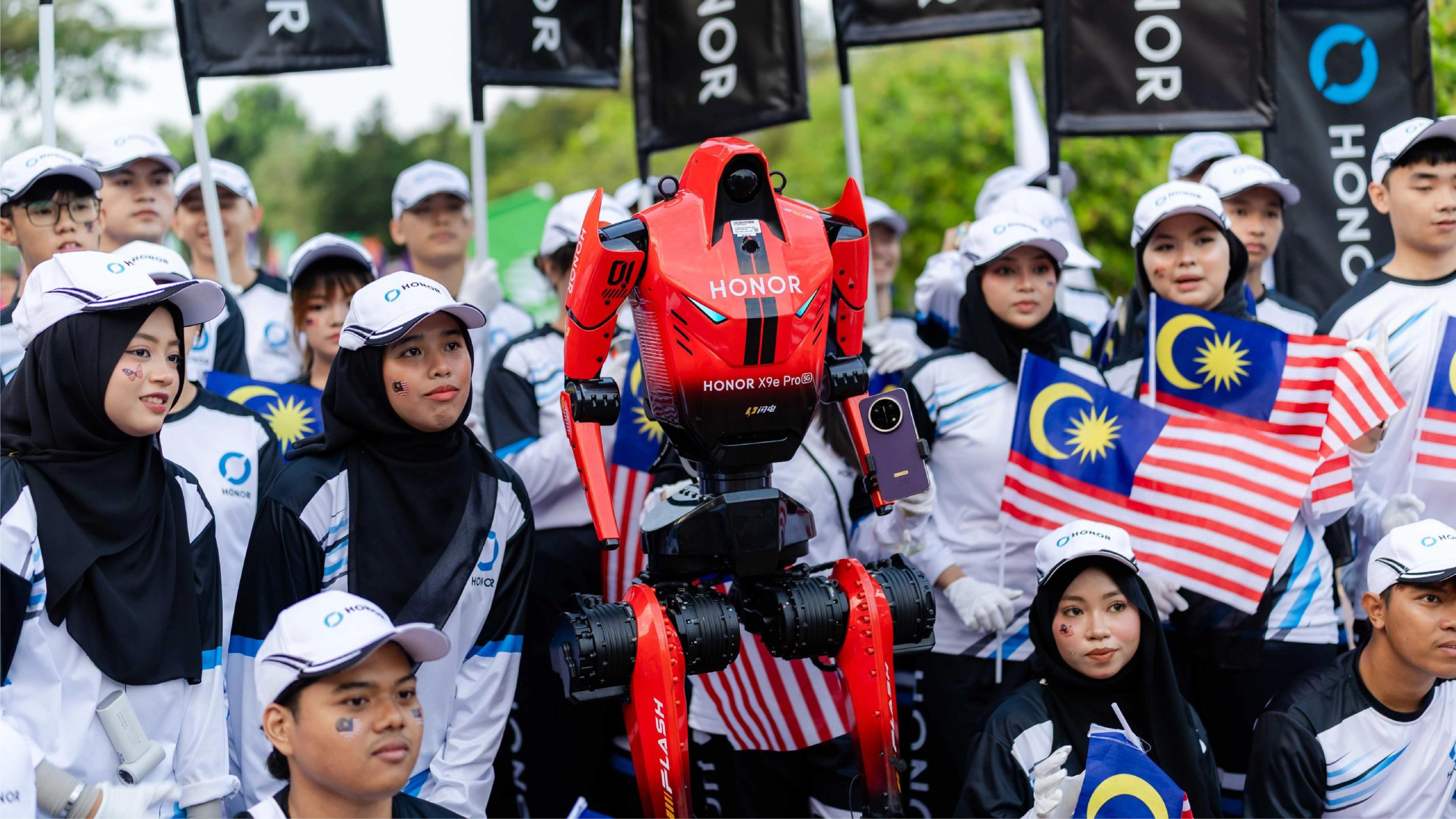
HONOR’s D1 humanoid robot completed the 10-kilometer category at the Malaysia Marathon, marking its first public appearance outside China. The Star reported that D1 completed the 10K in Kuala Lumpur
HONOR brought two humanoid robots to Kuala Lumpur for the event. D1 took on the 10K route, while the smaller A1 joined the 5K route alongside Deputy Prime Minister Ahmad Zahid Hamidi, ministers, celebrities, and other participants.
The run put D1 through Malaysia’s hot outdoor conditions. HONOR said the sustained heat created additional demands on the robot’s battery endurance, movement stability, and ability to maintain performance over a longer distance. The company had described the 10K as a test of D1’s speed, stability, and ability to handle different terrain. The Star’s report on the 10K challenge
HONOR says the robot completed the Beijing E-Town Humanoid Robot Half-Marathon in 50 minutes, 26 seconds in April. HONOR’s own event page also lists a peak speed of 14.5 meters per second. HONOR’s official D1 event page
The 50:26 result was faster than the reported human men’s half-marathon world record at the time, but the robot competed in a separate humanoid-robot event.
The result, therefore, should not be described as an official human athletics world record. Xinhua’s report on HONOR’s half-marathon result
The Malaysia appearance was not limited to the marathon. D1 subsequently appeared at Malaysia’s National Day Parade in Putrajaya on Aug. 31, where it marched with HONOR’s contingent. The Borneo Post’s report from the parade
HONOR had announced the Malaysia events as the robots’ first international appearance before the marathon. The company said D1’s 10K run would test its speed, stability and terrain-traversal capabilities. SoyaCincau’s report on the planned Malaysia events
The marathon remains a public demonstration rather than evidence that D1 is ready for routine commercial work. Completing a 10K shows that the robot can operate in a particular outdoor setting, but it does not establish how reliably it could perform useful work over longer periods or in less predictable environments.
That distinction matters as humanoid robot makers increasingly move demonstrations out of laboratories and into public spaces. In D1’s case, the more important question is what useful tasks it can perform beyond the race.
More articles on this topic
278 articles ReportWhat it Really Costs to Own a Personal Assistant Robot at Home
 ReportHumyn Labs Raises $47 Million to Build Real-World Training Data for Robotics
 ReportBoston Dynamics Selects GlobalFoundries as First Semiconductor Customer for Atlas Humanoid Trials
 ReportGenesis AI Raises $500 Million at a $3.5 Billion Valuation to Scale General-Purpose Robots
 ReportMultiway Robotics Showcases Intralogistics Solutions and Wheeled Humanoid at CeMAT ASIA
 ReportFORT Robotics Files Registration Statement for Public Listing Partnership
 ReportRobot Baristas are Learning to Reproduce the Art of Professional Coffee Making
 ReportTARSBOT and Aptiv Plan to Deploy 100 Industrial Robots Across 33 Factory Applications
 ReportSouth Korea Proposes $39 Million for Robot Actuators, Humanoid Batteries and AI Sensors
 ReportLoongson Completes ROS 2 Integration on Its Domestic Computing-Powered Intelligent Robot Vehicle
 ReportBoston Dynamics Puts Wheels on Atlas Humanoid to Test Reinforcement Learning and Motor Limits
 ReportAnt Group Open-Sources LingBot-Touch to Give Robots a Shared Sense of Touch
BUSINESS NEWS WEEKLY LETTER
The Weekly Letter for Robotics Professionals, Summarizing the Most Important Industry Moves, Launches, Deals and Signals.